Plastic strapping is widely used for cartons, pallets, bundles, warehouse packaging, and export shipments. But if the strap is not tightened or sealed correctly, the package may loosen during handling or transportation.
One common question is:
How do you use plastic strapping with metal clips correctly?
The basic process is simple: wrap the strap around the load, place the metal clip on the overlapped strap ends, tighten the strap with a manual tensioner, seal the clip with a matching sealer, and then check whether the joint is secure.
This guide explains the correct operating method, the tools you need, and the common mistakes to avoid when using PET or PP strapping with metal clips.
Quick Answer: How Do You Use Plastic Strapping with Metal Clips?
To use plastic strapping with metal clips, wrap the PET or PP strap around the package, overlap the two strap ends, place the correct metal clip over the overlap area, tighten the strap with a manual tensioner, crimp the clip with a matching sealer, cut off the excess strap, and check that the joint is secure.
For reliable packaging, the strap, clip, and tool must match each other. Buyers should confirm strap width, strap thickness, clip type, sealer size, and application load before using metal clips for pallet packaging, cartons, bundles, or export shipments.
Watch the Video: Plastic Strapping with Metal Clips
Suggested video title on the page:
How to Use Plastic Strapping with Metal Clips for PET and PP Strapping
This video shows the basic operation process, including placing the clip, tightening the strap, sealing the joint, and checking whether the strap is locked properly.
What Are Metal Clips Used for in Plastic Strapping?


Metal clips are used to lock plastic strapping after the strap has been tensioned. They help hold the two strap ends together and keep the package secure during movement, storage, or shipping.
For PET and PP strapping, the clip should provide enough grip after sealing. In many packaging applications, serrated seals for PET and PP strapping are preferred because the inner teeth help grip the strap surface and reduce the risk of slipping.
What Type of Clip Should Be Used for PET or PP Strapping?
The right clip should match three things:
strap width
strap thickness
manual sealer size
If the clip does not match the strap, the joint may become loose even if the strap has been tightened. For pallet packaging, export shipments, or heavier cartons, a serrated metal seal is usually more reliable than a smooth clip.
Are Metal Clips the Same as Plastic Buckles?
No. Plastic buckles are usually used for light-duty PP strapping or simple hand-tied packaging. Metal clips are normally used together with a tensioner and sealer, which gives the package a stronger and more consistent joint.
For light cartons, plastic buckles may be enough. For heavier pallets or industrial packaging, metal clips are usually the safer choice.
Tools You Need Before Using Plastic Strapping with Metal Clips
Before starting, prepare the correct strap, clip, and tool combination. A good joint depends on all three parts working together.
1. Plastic Strapping

You can use PP strapping or PET strapping depending on the load.
PP strapping is commonly used for light cartons, small bundles, and lower-tension packaging. PET strapping is stronger and is often used for pallet packaging, building materials, timber, metal products, paper industry packaging, and export shipments.
For heavier pallet loads, PET strapping for pallet packaging is usually a better choice because it offers higher strength and better tension retention.
2. Metal Clips or Serrated Seals
The clip must match the strap width and the tool being used. If the clip is not suitable for the strap, it may not hold the joint properly after sealing.
For PET and PP strapping, serrated seals are commonly used because they provide better grip on the plastic strap surface.
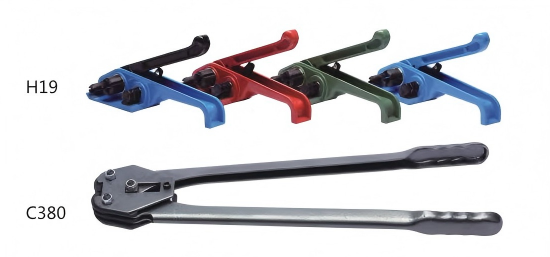
3. Manual Strapping Tools

A typical manual strapping setup includes:
manual tensioner
manual sealer
strap cutter
safety gloves
You can choose suitable manual strapping tools according to the strap material, strap width, and packaging method.
Plastic Strapping, Metal Clips, and Tool Compatibility Checklist
| What to Check | Why It Matters | Buyer Tip |
| Strap material | PET and PP strapping have different strength and recovery performance | Use PET strapping for heavier pallets and PP strapping for lighter cartons |
| Strap width | The clip and sealer must match the strap width | Common widths may include 12 mm, 16 mm, 19 mm, and other sizes depending on the application |
| Strap thickness | Thicker straps may need stronger clips and matching tools | Confirm thickness before ordering clips or sealers |
| Clip type | Serrated seals usually grip PET and PP strapping better than smooth clips | Use serrated seals when stronger grip is needed |
| Manual tensioner | The tensioner must match the strap material and width | Wrong tools can deform the strap or fail to tension properly |
| Manual sealer | The sealer must match the metal clip size | A mismatched sealer can create weak or uneven crimping |
| Load type | Cartons, pallets, timber, paper, metal products, and export loads need different tension levels | Do not over-tension light cartons or under-tension pallet loads |
Step-by-Step Guide: How to Use Plastic Strapping with Metal Clips
Step 1: Wrap the Plastic Strap Around the Package
Pass the strap around the carton, pallet, bundle, or product. Make sure the strap lies flat against the package surface.
Avoid twisting the strap. A twisted strap may reduce holding strength and make the clip harder to seal correctly.
Tip for Pallet Packaging
When strapping a pallet, position the strap in a stable area. If the load has sharp edges, use corner protectors to reduce damage to the strap and the package.
Step 2: Place the Strap into the Manual Tensioner Slot

After the strap is wrapped around the package, place the overlapped strap into the manual tensioner slot.
Make sure the lower strap layer is held in place and the upper strap end is positioned correctly for tightening. The strap should sit straight inside the tool. If the strap is tilted, folded, or not fully inserted, the tensioner may not grip it properly.
What to Check Before Tightening
Before pulling the tensioner handle, check that:
both strap layers are aligned
the strap is sitting flat in the tensioner slot
the loose strap end can move through the tool
the strap is not folded or twisted inside the tensioner
the tensioner is stable on the package surface
Step 3: Tighten the Strap with the Manual Tensioner

Operate the manual tensioner to pull the plastic strap tight around the package.
The tension should be strong enough to stabilize the load, but not so strong that it crushes cartons, damages the product, or deforms the strap. PET strapping can usually handle higher tension than PP strapping, which is why PET strapping is often used for heavier pallets, export packaging, timber, metal products, and paper industry packaging.
Avoid Over-Tensioning
Do not pull the strap too aggressively. Over-tensioning may cause:
The goal is to keep the package stable, not to crush the load.
Step 4: Insert the Serrated Seal After the Strap Is Tightened

After the strap has been tightened, insert the serrated seal onto the overlapped strap area.
This step is important. The serrated seal should be placed after the strap is tensioned, so the strap remains tight before the joint is locked.
Make sure both strap layers are inside the seal. The seal should sit flat on the strap and align with the strap width. If the seal is tilted or only covers one strap layer, the final joint may be weak.
For PET and PP strapping, serrated seals for PET and PP strapping are commonly used because the inner teeth help grip the plastic strap surface after crimping.
What to Check Before Crimping
Before using the manual sealer, check that:
the strap is already tightened
both strap layers are inside the serrated seal
the seal matches the strap width
the seal sits flat on the strap
the seal is not too close to the package edge
the strap is still under proper tension
Step 5: Crimp the Serrated Seal with a Manual Strapping Sealer

After the strap is tightened, use a matching manual sealer to crimp the metal clip. The sealer must match the clip size and strap width.
Press the sealer firmly so the clip locks both strap layers. A weak or uneven crimp may cause the strap to loosen during transportation.
How to Identify a Good Seal
A good seal should be:
If the metal clip looks loose, tilted, or uneven, remove it and seal the strap again with a new clip.
Step 6: Cut the Excess Strap and Check the Joint

After sealing, cut off the extra strap with a proper cutter. Then inspect the joint before moving the package.
The strap should stay tight, and the clip should not slide when the strap is pulled gently.
Final Inspection Checklist
Before transportation or storage, check:
Is the strap still tight?
Is the clip fully crimped?
Is the strap slipping?
Is the clip positioned safely?
Is the package stable enough for handling?
Can Plastic Buckles Be Used for Poly Strapping?
Plastic buckles can be used for some light-duty poly or PP strapping applications. They are simple to use and may not require a sealer.
However, they are not always suitable for heavier loads. If the package needs stronger holding force, better tension control, or safer transport performance, metal clips are usually a better choice.

")
")
| Fastener Type | Common Use | Strength Level | Tool Requirement | Suitable Application |
| Plastic buckles | Light PP strapping | Low to medium | Usually hand tightening | Small cartons, light packages |
| Wire buckles | Cord or composite strapping | Medium | Tensioner may be used | Bundling, temporary packaging |
| Metal clips | PET and PP strapping | Higher | Tensioner and sealer | Pallets, warehouse packaging, export loads |
For light packaging, plastic buckles may work well. For industrial packaging, pallet loads, or export shipments, metal clips normally provide a stronger and more stable joint.
When Should You Use PET Strapping Instead of PP Strapping?
Both PET and PP are plastic strapping materials, but they are designed for different packaging needs.
PP Strapping Is Better for Light-Duty Packaging
PP strapping is commonly used for:
cartons
light bundles
small packages
warehouse sorting
short-distance transport
It is flexible and cost-effective for light packaging.
PET Strapping Is Better for Heavy-Duty Packaging
PET strapping is better for:
For heavier pallets, export packaging, timber, paper, building materials, or loads that need better tension retention, buyers can review JUHONG's PET strapping options before choosing the strap and clip combination.
Common Mistakes When Using Plastic Strapping with Metal Clips
Even if the strap and clip look correct, small operation mistakes can still lead to loose packaging or failed joints.
Mistake 1: Using the Wrong Clip Size
The clip must match the strap width. If the clip is too large or too small, it may not lock the strap properly.
Mistake 2: Choosing a Clip with Poor Grip
Plastic strapping needs enough surface grip after sealing. If the clip cannot hold the strap surface well, the joint may slip. For PET and PP strapping, a serrated seal is often a better option.
Mistake 3: Using the Wrong Sealer
The sealer should match the clip size and strap width. If the tool does not fit, the crimp may be uneven or too weak.
Mistake 4: Over-Tensioning the Strap
Over-tensioning may damage the package or deform the strap. The correct tension should keep the load stable without crushing the product.
Mistake 5: Placing the Clip Too Close to the Edge
If the clip is too close to the pallet edge or carton corner, it may be affected by impact during handling. Place the clip in a stable position where it can hold the strap evenly.
How to Choose the Right Clip for Plastic Strapping
Choosing the correct clip is just as important as choosing the strap itself.
Match the Clip to the Strap Width
The clip should match the actual strap width, such as 12 mm, 16 mm, 19 mm, 25 mm, or other common sizes.
Match the Clip to the Strap Material
PET and PP strapping may require different holding strength. For better grip, serrated seals are commonly used with plastic strapping.
Match the Clip to the Tool
The clip must match the manual sealer. Even if the strap and clip are correct, the wrong sealer can still create a weak joint.
Match the Clip to the Application
For light cartons, a simple fastening method may be enough. For pallets, export packaging, or heavier loads, choose a stronger clip, suitable PET strapping, and the correct manual tool.
For compatible clip types and seal options, buyers can compare JUHONG's strapping seals for PET, PP, and steel strapping applications.
FAQ About Plastic Strapping and Metal Clips
1. Can I use metal clips with plastic strapping?
Yes. Metal clips can be used with PET and PP strapping when the clip size, strap width, and sealer are properly matched.
2.What type of clip is best for PET or PP strapping?
For PET and PP strapping, serrated seals are often used because the inner teeth help grip the plastic strap surface and reduce slipping after crimping.
3.Are plastic buckles strong enough for poly strapping?
Plastic buckles can be used for light-duty poly or PP strapping. For pallet packaging, heavier cartons, or export shipments, metal clips are usually more reliable.
4.Why does my plastic strapping slip after sealing?
Plastic strapping may slip if the clip is the wrong size, the sealer does not match the clip, the strap is not tensioned correctly, the clip is not fully crimped, or the strap surface does not have enough grip. Buyers should check the strap width, clip type, sealer size, and application method.
5.Do I need a tensioner for plastic strapping?
For light packaging, some users may tighten the strap by hand. For PET strapping, pallet packaging, or industrial loads, a manual tensioner is recommended.
6.Can I use the same clip for PET and PP strapping?
Sometimes, but it depends on the strap width, strap thickness, and required holding strength. Always check whether the clip and sealer match the strap.
7.Can PET strapping be used with metal clips?
Yes. PET strapping can be used with metal clips when the clip and sealer are compatible with the strap width and thickness. For heavier loads, serrated seals are commonly used to improve grip on the PET strap surface.
8.What information should I provide before buying plastic strapping and metal clips?
Buyers should provide the strap material, strap width, strap thickness, load type, package weight, application method, tool type, and whether the packaging is for cartons, pallets, warehouse handling, or export shipments.
Need Plastic Strapping, Metal Clips, and Manual Tools?
Using plastic strapping with metal clips is not difficult, but the strap, clip, and tool must work together. A strong packaging system depends on the right combination of strap material, clip type, and manual tool.
JUHONG Packing Materials supplies PET strapping, PP strapping, serrated seals, and manual strapping tools for carton bundling, pallet packaging, warehouse packaging, and export shipments.
For related products, you can visit:
If you are not sure which strap, clip, or tool is suitable for your package, contact JUHONG Packing Materials for a recommended solution based on your load type, strap size, and packaging method.
![]() juhong packing materials Strapping Seals Brochure.pdf
juhong packing materials Strapping Seals Brochure.pdf
![]() juhong packing Polyester strapping Brochure.pdf
juhong packing Polyester strapping Brochure.pdf
![]() juhong strapping tools.pdf
juhong strapping tools.pdf
 简体中文
简体中文