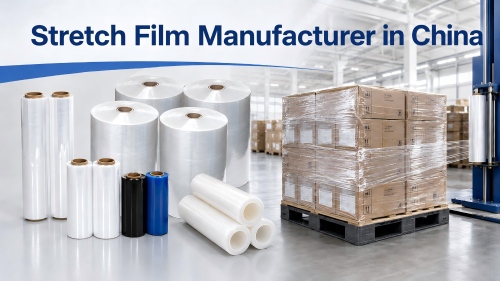
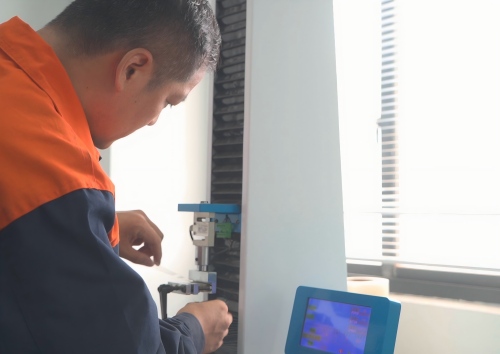
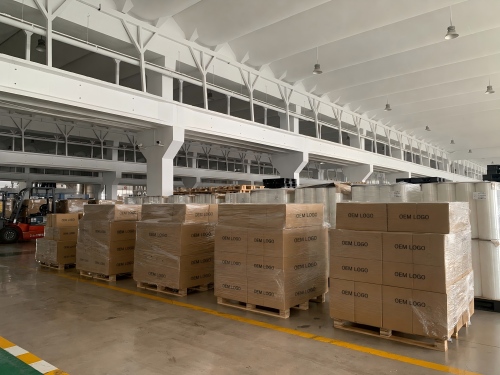
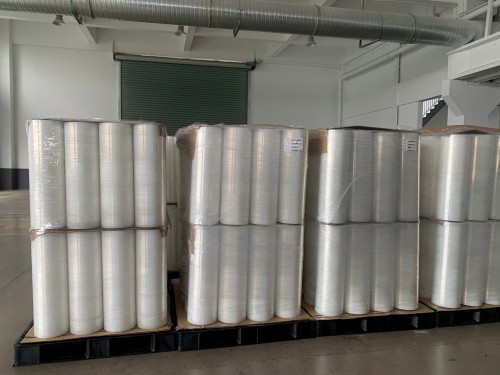
Choosing a stretch film manufacturer in China is not only about comparing roll prices. Overseas buyers should check product specifications, dimensional tolerance, roll weight consistency, film performance, OEM capability, production capacity, export experience, and whether the supplier can support stable long-term orders.
For industrial packaging buyers, stretch film is used for pallet wrapping, warehouse storage, export packaging, and transportation protection. A reliable China stretch film supplier should be able to explain how its film performs in real wrapping conditions, not only provide a low quotation.
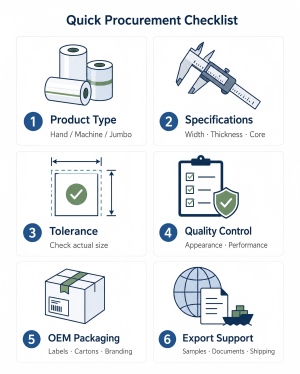
Quick Buyer Checklist Before Ordering Stretch Film from China

Before placing a bulk order, overseas buyers should confirm:
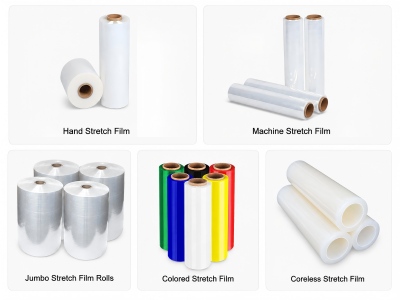
Product type — hand stretch film, machine stretch film, jumbo rolls, colored stretch film, or coreless stretch film.
Film specifications — width, thickness, roll length, roll weight, core size, and packing method.
Tolerance requirements — thickness tolerance, width tolerance, roll length tolerance, roll weight or yield tolerance.
Mechanical performance — breaking force, elongation, cling, puncture resistance, elastic recovery, and stress retention where required.
OEM support — custom width, thickness, color, label, carton, pallet packing, and private branding.
Application matching — warehouse wrapping, export pallet packaging, automatic pallet wrappers, or converter use.
Export capability — lead time, documents, container loading, shipping terms, and after-sales communication.
The lowest roll price is not always the lowest packaging cost. Buyers should evaluate the total cost per wrapped pallet, including film usage, breakage rate, load stability, and repeat order consistency.
Why Overseas Buyers Source Stretch Film from China
China is one of the major manufacturing bases for industrial packaging materials. For overseas buyers, sourcing stretch film from China can offer several advantages: wide product options, OEM packaging flexibility, bulk supply capacity, and competitive production cost.
However, not every supplier is suitable for long-term B2B cooperation. Some suppliers may quote attractive prices but have limited control over production, film consistency, quality testing, or export packing.
For importers, distributors, and industrial packaging buyers, repeat order stability is often more important than the first quotation. A reliable supplier should be able to keep film thickness, roll weight, stretch performance, winding quality, and packing method consistent from one shipment to the next.
This is especially important for buyers who use stretch film for export pallets, warehouse storage, or automatic pallet wrapping lines. If the film changes from batch to batch, buyers may face film breakage, unstable pallet loads, higher material usage, or complaints from their own customers.
So the better question is not only:
“Who can offer the lowest price?”
It is:
“Which manufacturer can supply stable stretch film for repeated orders?”
Check the Manufacturer’s Stretch Film Product Range

A professional stretch film manufacturer in China should offer more than one standard roll. Different buyers use stretch film in different packaging environments, so product range is an important first checkpoint.
Hand Stretch Film
Hand stretch film is used for manual pallet wrapping, warehouse packaging, small-volume wrapping, and flexible packing operations. Buyers should check roll width, thickness, net film weight, paper core size, cling, transparency, puncture resistance, and carton packing.
This type of film is suitable for warehouses, small packaging stations, mixed pallet loads, and operations where workers need flexible manual wrapping.
Machine Stretch Film
Machine stretch film is designed for semi-automatic and fully automatic pallet wrappers. Compared with hand film, it usually requires more stable unwinding, better stretch performance, stronger break resistance, and better roll consistency.
If buyers use turntable wrappers, rotary arm wrappers, or automatic wrapping lines, they should confirm pre-stretch performance, film tension, roll length, film breakage rate, and machine compatibility before bulk ordering.
Jumbo Stretch Film Rolls
Jumbo stretch film rolls are usually used by converters, distributors, or factories that rewind film into smaller rolls. For jumbo roll buyers, roll weight, winding tension, film flatness, thickness consistency, and slitting performance are especially important.
A jumbo roll supplier should be able to support stable winding, consistent thickness, and suitable roll weight for downstream converting.
Colored Stretch Film
Colored stretch film can be used for pallet identification, warehouse classification, shipment privacy, and inventory control. Black stretch film is often used when buyers want to hide pallet contents during storage or transportation.
For buyers who manage different product categories, colored stretch film can also help improve warehouse organization and shipment recognition.
Coreless Stretch Film
Coreless stretch film can reduce paper core waste and improve usable film weight. It is suitable for manual wrapping users who care about waste reduction and warehouse handling efficiency.
For some distributors and warehouse users, coreless rolls can also help reduce disposal work after the film is used.
Confirm Film Specifications and Tolerance Before Ordering
For overseas buyers, stretch film specifications should be confirmed clearly before production. Do not rely only on general descriptions such as “standard roll,” “good quality,” or “normal packing.” These descriptions are too vague for international B2B orders.
A clear purchase specification should include film width, thickness, roll length, net film weight, core size, film type, packing method, and acceptable tolerance range.

| Item | What Buyers Should Confirm |
| Film width | Nominal width and allowed width tolerance |
| Film thickness | Nominal thickness and thickness tolerance |
| Roll length | Marked length and acceptable length tolerance |
| Roll weight | Net film weight or gross roll weight |
| Core size | Core inner diameter, core length, and core weight |
| Film type | Hand film, machine film, colored film, coreless film, or jumbo roll |
| Packing method | Roll packing, carton packing, pallet packing, and container loading |
| Performance target | Elongation, puncture resistance, cling, or machine compatibility if required |
For tolerance control, buyers can refer to the supplier’s product specification, agreed purchase contract, or recognized industry standards. For example, some stretch film standards give reference tolerances for film width, thickness, roll length, roll diameter, and roll weight or yield. In China, BB/T 0024—2018 also provides reference requirements for transport packaging stretch wrap film, including width deviation, thickness deviation, core size deviation, roll weight deviation, appearance, mechanical properties, cling, elastic recovery, and puncture resistance.
The key point is simple: the tolerance should be written clearly before production. If a buyer only confirms price and roll size but does not confirm tolerance, later disputes may happen when the goods arrive.
Evaluate Quality Control Before Placing Bulk Orders
Quality control should not stop at checking whether the film looks clear and smooth. A reliable stretch film supplier should control dimensions, thickness consistency, roll weight, winding quality, appearance, and actual wrapping performance.

Key Quality Points to Check
| Quality Item | Why It Matters |
| Uniform thickness | Helps keep wrapping performance stable from roll to roll |
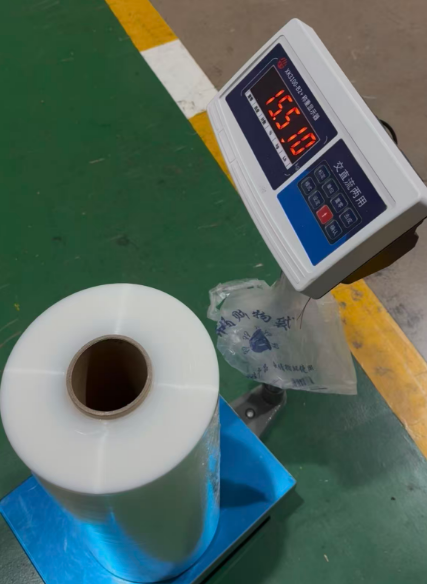
| Roll weight consistency | Prevents disputes over net weight and actual film usage |
| Breaking force | Shows whether the film can resist pulling force during wrapping |
| Elongation | Shows how far the film can stretch before breaking |
| Puncture resistance | Important for cartons, sharp corners, irregular pallets, and export loads |
| Cling | Helps the film layers hold tightly without extra tape |
| Transparency | Supports barcode scanning and visual checking |
| Winding quality | Reduces film breakage and machine feeding issues |
| Appearance | Helps identify bubbles, holes, hard blocks, broken film, or foreign matter |
Buyers should avoid using one universal number for all stretch films. Hand film, machine film, pre-stretched film, and high-performance machine film may have different performance expectations. A specification that works for manual warehouse wrapping may not work for automatic pallet wrappers.
For example, puncture resistance should be evaluated according to a clear test method and unit. It should not be written casually as “N/μm” unless that unit and method are specifically agreed. Cling should also be reported according to the agreed test method, rather than mixing N, N/cm, and N/cm² without explanation.
Use Test Reports Correctly
If buyers require test reports, they should first confirm which test method and acceptance value will be used. Some standards describe how to test stretch film properties, such as tensile performance, elastic recovery, cling, or puncture resistance, but they do not always provide one universal pass/fail value for every application.
For example, machine stretch film used on an automatic pallet wrapper may need different performance requirements from hand stretch film used for manual warehouse wrapping. The required values should be confirmed based on the buyer’s actual packaging application, wrapping method, pallet load, and shipping conditions.
A useful test report should match the real order specification. Buyers should check whether the tested sample, film thickness, roll type, and testing conditions are consistent with the product they plan to order.
Ask About OEM Stretch Film and Custom Packaging

For distributors, packaging wholesalers, and private-label buyers, OEM stretch film support is an important part of supplier evaluation.
A strong stretch film factory should be able to support customized specifications and packaging, such as:
| OEM Item | Buyer Benefit |
| Custom roll width | Matches local market demand or machine requirements |
| Custom thickness | Supports different load levels and price segments |
| Custom roll weight | Helps distributors build stable product lines |
| Custom film color | Useful for warehouse coding or shipment privacy |
| Custom label | Supports brand recognition and resale |
| Custom carton | Improves wholesale or retail presentation |
| Custom pallet packing | Helps container loading and warehouse storage |
| Private-label packaging | Supports local distributor branding |
Before confirming OEM orders, buyers should check MOQ, sample cost, sample lead time, label design requirements, carton artwork requirements, color matching, packing method, pallet size, container loading quantity, and repeat order lead time.
OEM service is not only about printing a label. It requires production control, packing control, and communication accuracy. A supplier who understands OEM orders should help buyers balance branding requirements, packaging cost, and production efficiency.
Check Production Capacity and Delivery Stability
Stretch film is a consumable packaging material, so many buyers place repeat orders. A supplier’s production capacity and delivery stability are important for importers, wholesalers, and industrial users.

Buyers should ask:
How many production lines does the factory have?
What types of stretch film can the factory produce regularly?
What is the normal lead time for standard products?
What is the lead time for OEM packaging?
Can the factory support repeat container orders?
How does the factory handle urgent orders?
Can the supplier provide production photos, inspection photos, or loading photos?
Can the supplier support samples before mass production?
A monthly capacity number is not enough. Buyers should confirm whether the supplier can consistently produce the specific film type they need, such as machine stretch film, jumbo rolls, colored stretch film, or coreless stretch film.
For long-term cooperation, buyers should also check whether the supplier can maintain stable communication before, during, and after production.
Do Not Choose a China Stretch Film Supplier by Price Only
Price matters, but low price alone can create hidden costs. Stretch film is a consumable product, so buyers often compare price per roll or price per kilogram. However, the real packaging cost should be measured by wrapping performance.
Low-quality stretch film may cause:
A cheaper roll may become more expensive if workers need more wraps per pallet or if the film breaks frequently on automatic wrapping machines.
A better comparison should include:
| Cost Factor | What to Check |
| Price per kg | Basic material cost comparison |
| Net film weight | Avoid confusing gross weight with usable film weight |
| Film length | Important for cost per wrapped pallet |
| Number of wraps | Affects total film consumption |
| Breakage rate | Affects labor and machine downtime |
| Load stability | Affects transport damage risk |
| Repeat order consistency | Affects long-term procurement cost |
For B2B buyers, the best supplier is not always the cheapest supplier. It is the supplier that can provide stable quality, predictable delivery, and fewer problems over repeat orders.
How to Test Samples Before Bulk Ordering
Sample testing is one of the most practical ways to evaluate a stretch film manufacturer in China. A sample should be tested under real packaging conditions, not only checked by hand.
Step 1: Confirm Your Packaging Application
Tell the supplier your real application:
Manual wrapping or machine wrapping
Pallet size
Pallet weight
Load shape
Carton type
Sharp edges or irregular load
Warehouse storage or export transport
Wrapping machine model if available
Current film thickness and roll size
The more information you provide, the more accurate the supplier’s recommendation will be.
Step 2: Request Matching Samples
Ask the supplier to recommend one or two suitable film options. For example:
Standard hand stretch film for manual warehouse wrapping
Stronger hand stretch film for export pallets
Machine stretch film for automatic pallet wrappers
Jumbo rolls for converting or rewinding
Coreless stretch film for lower paper core waste
A focused sample test is more useful than testing too many random rolls at once.
Step 3: Test Film Under Real Conditions
During sample testing, check:
Is the film easy to unwind?
Does it break during wrapping?
Does it cling well after wrapping?
Does the pallet feel stable?
Does the film resist corners and edges?
Is transparency acceptable?
Does the roll weight match the supplier’s claim?
Does the film perform consistently across several pallets?
For machine wrapping, also check whether the film works smoothly with the pre-stretch system, tension setting, and wrapping speed.
Step 4: Compare Cost Per Pallet
After testing, calculate:
This gives a more practical result than comparing roll price only.
Step 5: Confirm Bulk Order Specification
Once the sample passes, confirm the final specification in writing:
This reduces misunderstanding before production.
What Makes JUHONG a Reliable Stretch Film Manufacturer in China
JUHONG Packing Materials has been manufacturing industrial packaging materials since 1997. Our product range includes stretch film, steel strapping, PET strapping, PP strapping, strapping seals, and related packaging solutions for B2B industrial users.
For stretch film, we focus on practical packaging performance for warehouse storage, pallet wrapping, export packaging, and automated wrapping lines. Our stretch film products include hand stretch film, machine stretch film, colored stretch film, jumbo stretch film rolls, and coreless stretch film.
For buyers looking for stable quality and OEM packaging support, JUHONG offers a full range of industrial stretch film products for warehouse packaging, pallet wrapping, and export shipments.
JUHONG Stretch Film Advantages
LLDPE-based cast stretch film production
Hand and machine stretch film options
300–500% stretch capability depending on product grade and application
Stable cling and puncture resistance
Custom thickness, width, color, and packaging
OEM and private-label packaging support
Sample support before bulk orders
Global shipping support
Experience serving industrial packaging buyers
As a factory-based supplier, JUHONG can help buyers match stretch film to different packaging situations, including manual warehouse wrapping, automatic pallet wrapping, export carton pallets, and bulk supply for distributors.
Common Mistakes Overseas Buyers Should Avoid
Mistake 1: Comparing Only Roll Price
A low price may hide unstable thickness, lower net weight, weak stretchability, or poor puncture resistance. Buyers should compare cost per pallet, not only cost per roll.
Mistake 2: Ignoring Net Weight and Gross Weight
Some buyers compare roll prices without checking whether the supplier is quoting net film weight or gross weight including the paper core. This can create hidden cost differences.
Mistake 3: Using Hand Film on Machine Wrappers
Hand stretch film and machine stretch film are not the same. Machine wrapping requires better roll consistency, stronger stretch performance, and stable unwinding.
Mistake 4: Not Testing Samples Before Bulk Orders
A sample test can reveal film breakage, weak cling, poor puncture resistance, unstable unwinding, or mismatch with wrapping machines before container production begins.
Mistake 5: Treating Test Methods as Product Specifications
Test methods are useful, but they do not always define universal pass/fail values. Buyers should agree on the required values with the supplier before production.
FAQ: Stretch Film Manufacturer in China
1. How do I choose a stretch film manufacturer in China?
Choose a stretch film manufacturer in China by checking product range, quality control, production capacity, OEM support, sample testing, export experience, and communication ability. Do not compare suppliers only by roll price.
2. What should overseas buyers check before ordering stretch film?
Overseas buyers should check film width, thickness, roll length, net weight, thickness tolerance, width tolerance, roll weight or yield tolerance, cling, puncture resistance, elongation, winding quality, packaging method, and sample performance.
3. What tolerance should buyers confirm before ordering stretch film?
Buyers should confirm film width tolerance, thickness tolerance, roll length tolerance, roll weight or yield tolerance, and core size tolerance before production. These values can be based on the supplier’s product specification, agreed purchase contract, or recognized industry standards.
4. Can a China stretch film supplier provide OEM stretch film?
Yes. Many China stretch film suppliers can provide OEM stretch film, including custom width, thickness, roll weight, color, label, carton, pallet packing, and private-label packaging. Buyers should confirm MOQ, artwork requirements, sample approval, and lead time before ordering.
5. Is thicker stretch film always better?
Not always. Thicker film may improve puncture resistance, but it can also increase packaging cost. The right film depends on pallet weight, load shape, wrapping method, transport distance, and required load stability.
6. Why is sample testing important before bulk orders?
Sample testing helps buyers check whether the film performs well in real packaging conditions. It can reveal problems such as film breakage, poor cling, weak puncture resistance, unstable unwinding, or mismatch with wrapping machines.
Final Thoughts
Choosing a stretch film manufacturer in China should be a structured supplier evaluation process. Overseas buyers should check product range, film specifications, tolerance requirements, quality control, OEM ability, production capacity, export support, and sample performance before placing a bulk order.
JUHONG Packing Materials supplies industrial stretch film products for warehouse packaging, pallet wrapping, export packaging, and automated wrapping applications. For buyers who need stable quality, OEM packaging, and long-term supply from China, JUHONG can support sample testing, customized specifications, and global shipping.
Looking for a reliable China stretch film supplier? Contact JUHONG to request samples, product specifications, or a custom quotation for your packaging application.
![]() juhong packing materials stretch film Brochure.pdf
juhong packing materials stretch film Brochure.pdf
 简体中文
简体中文