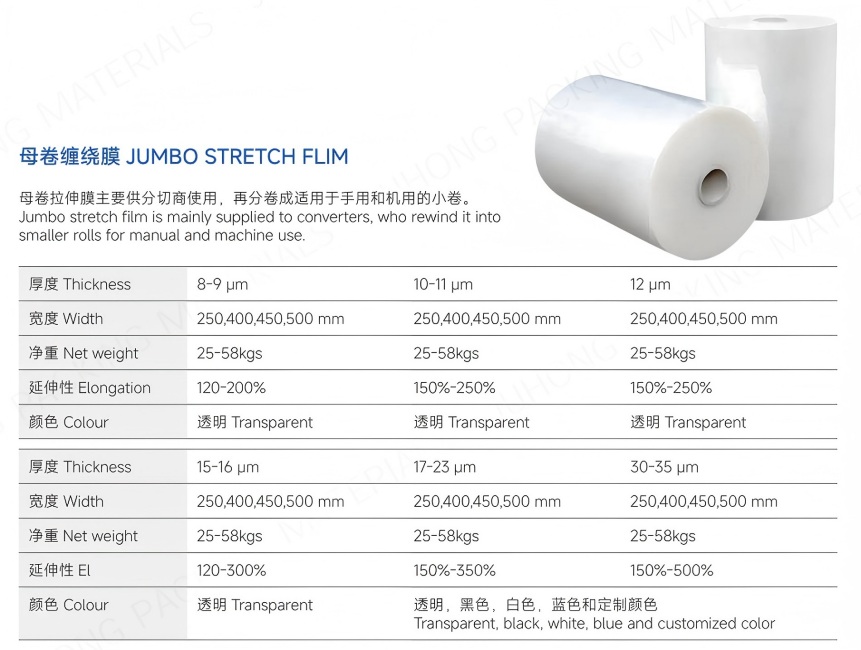
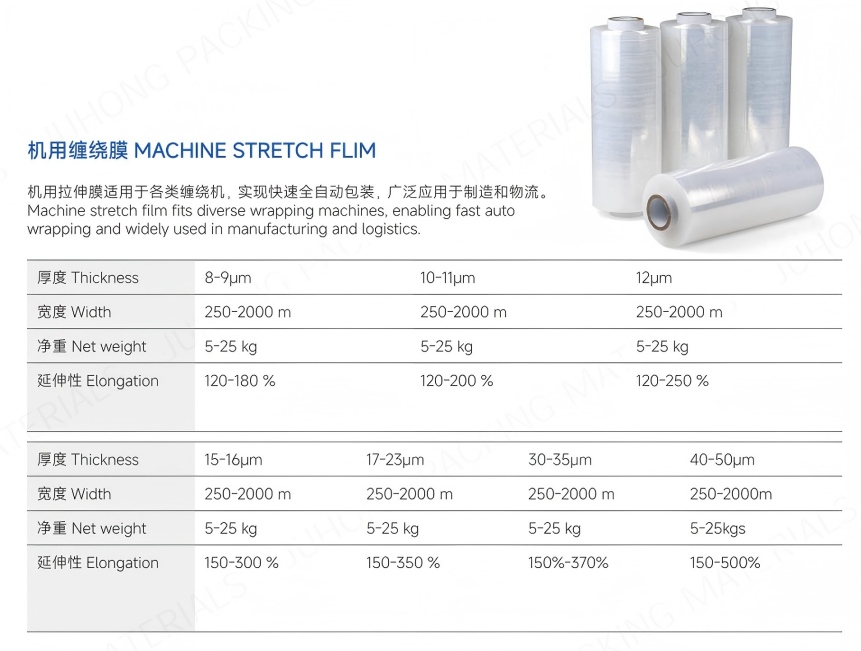
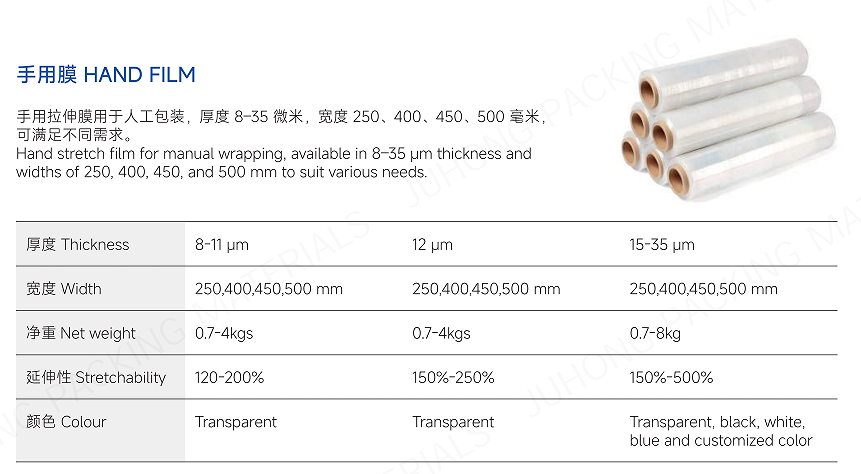
Choosing the right stretch film gauge is not just about using thicker film for safety or thinner film to reduce cost. In real pallet wrapping, the best film thickness depends on the load itself, how stable it is, whether it has sharp edges, how it is applied, and what kind of handling it will face during storage and transportation.
At JUHONG, we usually suggest starting with a simple question: what kind of load are you wrapping? A light and neatly stacked pallet does not need the same film thickness as a dense industrial load or an unstable shipment prepared for export. If the film is too thin, the load may loosen, lean, or tear through the wrap. If the film is thicker than necessary, packaging cost goes up without adding much real value.
In this guide, we’ll look at how to choose the right stretch film for light loads, standard loads, and heavy loads, and what really matters when comparing film thickness.
Quick Answer: Which Stretch Film Thickness Fits Your Load?
A simple way to think about it is this:
Light loads: usually 10–15 microns
Standard loads: usually 17–23 microns
Heavy loads: usually 25–30 microns
As a general rule, lighter loads usually do well with thinner film, while heavier pallets often need more thickness for better holding force and load stability during transport.
Still, thickness should not be chosen by weight alone. The final choice should also consider:
What Does Stretch Film Gauge Mean?
Stretch film gauge refers to the thickness of the film. In the U.S. market, film thickness is often shown in gauge, while many international buyers and manufacturers also use inches, millimeters, or microns.
In stretch film packaging, 80 gauge is one of the most common reference points. It is equal to:
0.0008 inches
0.0203 mm
20.3 microns
Thickness can be expressed in gauge, inches, or microns, and these values are usually written in decimal form. For example:
That is why many buyers use 80 gauge as a quick benchmark when comparing standard stretch film thickness.
In practical terms:
lower gauge usually means thinner film
higher gauge usually means thicker film
thicker film generally offers more puncture resistance and stronger load support
thinner film may reduce material use when the load is light and stable
But thickness is only part of the decision. Film performance also depends on stretch, cling, recovery force, and application method.


Stretch Film Gauge Conversion Chart
Because film thickness is shown in different units, a simple conversion chart makes comparison much easier.
| Gauge | Inches | mm | Microns | Typical Use |
| 60 gauge | 0.0006 | 0.0152 | 15.2 μm | Light, stable loads |
| 70 gauge | 0.0007 | 0.0178 | 17.8 μm | Light to standard loads |
| 80 gauge | 0.0008 | 0.0203 | 20.3 μm | Standard pallet wrapping |
| 90 gauge | 0.0009 | 0.0229 | 22.9 μm | Heavier or less stable loads |
| 100 gauge | 0.0010 | 0.0254 | 25.4 μm | Heavy-duty wrapping |
| 120 gauge | 0.0012 | 0.0305 | 30.5 μm | Heavy or demanding industrial loads |
In everyday pallet wrapping, 80 gauge / 20.3 microns is often treated as the standard benchmark for general use.
How to Choose Stretch Film for Light Loads

Light loads are usually the easiest to wrap. They place less pressure on the film and often do not require very high holding force.
When a Light Gauge Film Makes Sense
A lighter film often works well when the load is:
In many packaging applications, lighter goods such as daily-use products and low-weight packaged items can use thinner film to reduce material cost while still meeting basic wrapping needs.
Recommended Thickness for Light Loads
For many light-load applications, 10–15 microns is a practical range. This thickness is usually enough for:
Common Light Load Examples
Typical examples include:
A thinner film can be economical here, but only when the load itself is easy to contain.
How to Choose Stretch Film for Standard Loads

Standard loads are the most common category in warehouse operations, routine shipping, and export preparation.
What a Standard Load Usually Looks Like
A standard load often includes:
regular palletized cartons
consumer goods for shipment
warehouse transfer pallets
packaged products with relatively even surfaces
pallets that are stable but not extremely light
Why 80 Gauge Is a Common Reference Point
For general-purpose stretch wrapping, 80 gauge is often used as the standard benchmark. It equals 0.0008 inches, 0.0203 mm, and 20.3 microns.
Many buyers use it as a middle reference because it offers a workable balance of holding power, puncture resistance, and material efficiency.
Recommended Thickness for Standard Loads
For standard pallet wrapping, 17–23 microns is a practical range, with around 20 microns / 80 gauge often used as a starting point.
This range is suitable when you need:
dependable pallet stability
normal warehouse and shipping protection
reasonable puncture resistance
balanced packaging cost
For more consistent application on higher-volume lines, machine stretch film in this type of range is often easier to control than manual wrapping.
How to Choose Stretch Film for Heavy Loads

Heavy loads put much more stress on the film, especially during handling, stacking, and longer transport.
Signs Your Load Needs a Thicker Film
You may need stronger film when the load is:
dense or industrial
tall or less stable
exposed to rough handling
likely to shift during transport
packed with harder surfaces or more pressure points
Recommended Thickness for Heavy Loads
For many heavy-duty applications, 25–30 microns is a more suitable range.
In heavier applications, thicker film is usually preferred because it offers better rebound, stronger load support, and a tighter wrapping effect.
Why Recovery Force Matters for Heavy Pallets
Heavy-load performance is not only about thickness. The film also needs to recover after stretching and keep pressure on the load over time. If it stretches but does not hold well, the pallet may loosen after wrapping.
For heavy-duty wrapping, the film needs to do more than stretch. It needs to recover well, hold the load tightly, and stand up to puncture and tension during handling.
For manual wrapping on demanding pallets, the right hand stretch film matters just as much as the thickness itself.
Factors That Matter More Than Weight Alone
Many buyers start by looking at load weight, but that alone is not enough. In real packaging work, the right film thickness usually depends on several factors working together.
Load Shape and Stability
A square, well-stacked pallet is easier to wrap than an uneven or mixed load. A well-stacked pallet is much easier to secure than an unstable one, even when the total weight is similar.
Sharp Edges and Puncture Risk
Sharp corners, exposed parts, or rough surfaces put more stress on the film, so they usually need a stronger wrap.
Wrapping by Hand or by Machine
The same thickness may behave differently depending on application method. Manual wrapping depends more on the operator, while machine wrapping is usually more consistent.
Storage and Transport Conditions
A pallet stored locally in a warehouse does not face the same stress as one loaded into containers or shipped over long distances. Transport conditions should always be part of thickness selection.
Hand Stretch Film vs. Machine Stretch Film
The same film thickness can behave differently in hand wrapping and machine wrapping, so it makes sense to look at them separately.
Hand Stretch Film

Hand stretch film is commonly used for:
lower-volume wrapping
smaller warehouses
manual pallet securing
flexible wrapping tasks
Because the wrapping force depends more on the operator, buyers sometimes need to be more careful with thickness selection for unstable or heavier loads.
Machine Stretch Film

Machine stretch film is better suited for:
higher-volume pallet packaging
more consistent wrapping force
faster packaging lines
better control of film use
With machine wrapping, film tension is usually more consistent, which can help improve material efficiency on stable loads.
Common Mistakes When Choosing Stretch Film Thickness
A lot of wrapping problems start with a few common selection mistakes.
Choosing by Price Alone
A lower-priced film is not really saving money if it tears easily or makes you use more wraps per pallet.
Assuming Thicker Is Always Better
Thickness and cost savings do not always move in the same direction. If the film is too thin, packaging may fail. If it is thicker than necessary, material cost goes up without much benefit.
Ignoring Load Shape
Two pallets with similar weight can need very different film because one is stable and the other is irregular.
Using One Film for Every Product
Different products often need different solutions. One film specification may not suit every pallet in the warehouse.
Recommended Stretch Film Thickness by Load Type
Here is a simple summary table for quick reference:
| Load Type | Recommended Thickness | Best For |
| Light loads | 10–15 microns | Stable, lightweight goods |
| Standard loads | 17–23 microns | Regular pallet wrapping |
| Heavy loads | 25–30 microns | Industrial or higher-risk loads |
This table gives you a simple starting point, but the final choice should still depend on the load condition and wrapping method.
Final Thoughts
So, what gauge stretch film do you need for heavy, standard, and light loads?
The practical answer is:
Light loads: usually 10–15 microns
Standard loads: usually 17–23 microns
Heavy loads: usually 25–30 microns
But in real packaging work, the right choice depends on more than just whether the load is light or heavy. Load shape, stability, edge condition, wrapping method, and transport risk all matter.
At JUHONG, we do not believe the right film is always the thickest or the thinnest one. It is the one that gives your load the right level of protection, stability, and cost efficiency for the job. If you are comparing wrapping options, you can also explore our stretch film, bunding film, and machine stretch film solutions based on your packaging method.
![]() juhong packing materials stretch film Brochure.pdf
juhong packing materials stretch film Brochure.pdf
FAQs
1.What is the standard gauge for stretch film?
A common benchmark for general pallet wrapping is 80 gauge, which equals 0.0008 inches, 0.0203 mm, and 20.3 microns.
2.Is 80 gauge enough for heavy loads?
Sometimes, but not always. For heavier, irregular, or higher-risk pallets, film in the 25–30 micron range is often a better choice.
3.What thickness is best for light loads?
For many light and stable goods, 10–15 microns is a practical range.
4.Does hand wrapping need a different film choice?
It can. Hand wrapping depends more on operator consistency, so unstable or demanding loads may need more careful thickness selection than machine-wrapped pallets.
5.Is thicker stretch film always better?
No. Thicker film can improve holding power, but using more thickness than the application needs may only increase material cost without improving real packaging results.
 简体中文
简体中文