Buying machine-grade PET strapping in bulk involves more than finding the right width at a competitive price. Wholesalers and distributors need a specification they can sell against, evidence their customers can evaluate, and clear requirements for repeat orders. Industrial purchasing teams need the same clarity across the plants and lines they supply.
Two offers can list the same nominal size yet differ in dimensional tolerances, breaking-force requirements, coil length, or packing. Those differences affect whether the material suits the customer's equipment, how the quotes compare, and what counts as an acceptable delivery.
The practical starting point is to connect each purchased specification to its intended equipment and application, then use that specification throughout quotation, sample approval, and bulk ordering. If you are preparing a sourcing inquiry, review JUHONG’s machine grade polyester strapping alongside the requirements below.

Build the PET Strapping Purchase Specification Around the Customers You Supply

For a distributor buying polyester strap, a “machine grade”—distinct from hand grade PET strapping made for manual tensioning tools—label is only the starting point for matching stock to customer requirements. A roll approved for one installation does not establish suitability for every machine using the same strap width.
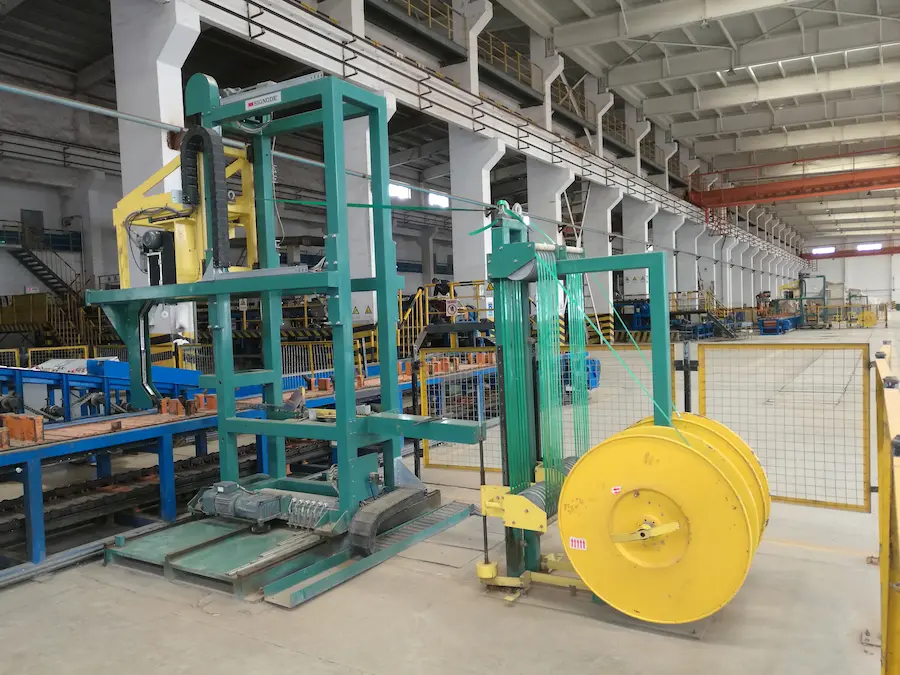
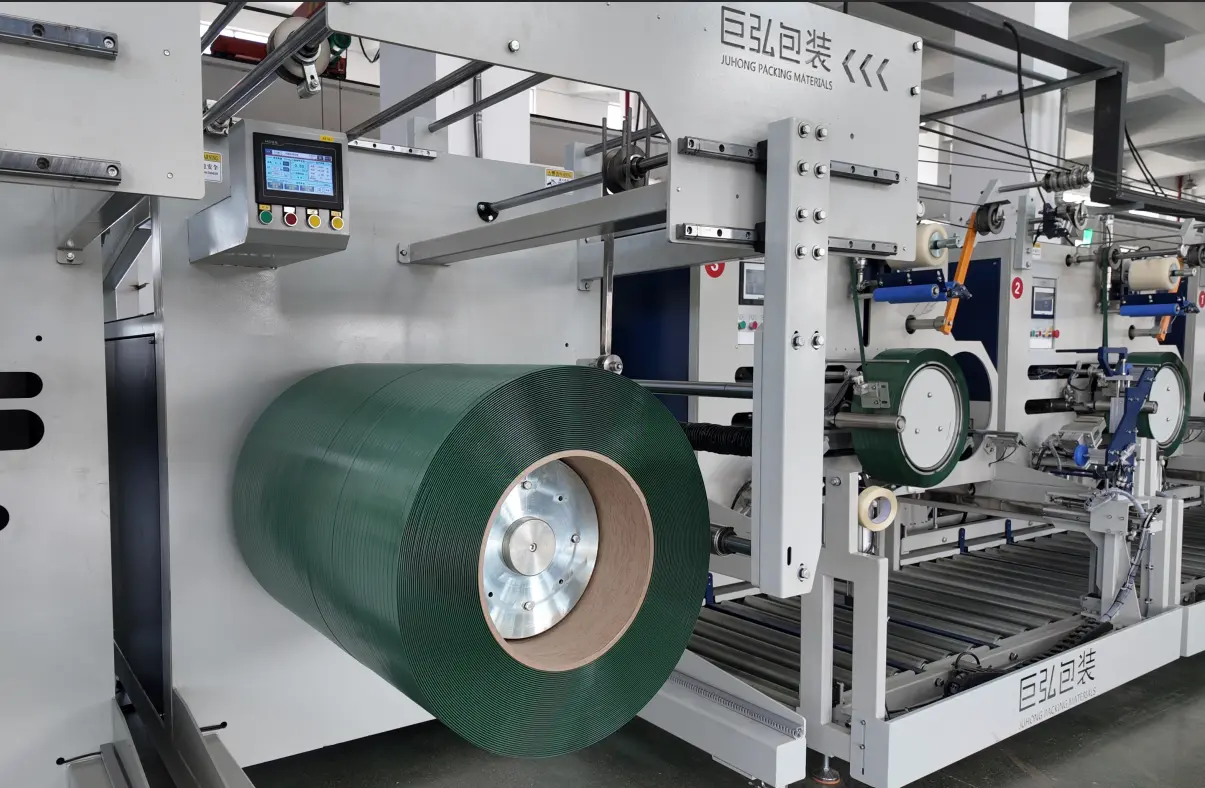
For customers using automatic strapping machines, start with the current strap specification and the requirements of the installed strapping head and dispenser. JUHONG’s machine grade PET strapping for automatic strapping machines can be evaluated against the customer’s equipment, coil format and application requirements before finalizing the SKU. The machine brand alone may leave important details unresolved, particularly where a line has been modified or uses a separate strapping head.
For a wholesaler stocking several specifications, record which customer requirements each SKU is intended to meet. Purchasing teams serving several plants should keep the same distinction by installation. This gives sales, procurement, and production a shared reference when someone proposes a substitute.
Many distributors also stock steel strapping or plastic strapping (polypropylene strapping), along with strapping tools such as tensioners and sealers, and matching strap seals alongside PET rolls. Keep the purchasing criteria for each material separate: a specification that is resistant to the tension and handling conditions of one strapping system does not automatically carry over to another product line. A durable, correctly specified strap reduces returns; flag any custom specification early so the supplier can confirm feasibility.
Specify Strap Dimensions and Performance Together
Nominal width and thickness identify a size; their tolerances define the permitted variation. That distinction matters when comparing machine straps because a nominal match does not establish that both products stay within the requirements of the customer's strapping equipment.
Breaking force also needs a clear basis. A typical result or sample average is not the same commitment as an agreed minimum. Breaking force, reported in units such as N or lbf, is different from tensile stress, which is expressed as force per unit area. If a quotation labels a value as “tensile strength,” check its units and test basis before comparing it with another offer.
For settling loads that can change shape during transportation, breaking force is only one part of the specification. If retained tension or elongation recovery is part of the customer's requirement, request supporting results under defined conditions. A higher breaking-force number does not establish those properties. Most machine-grade PET strap is joined by friction welding rather than metal seals; ask the supplier for the joint efficiency reported for that specific friction-weld setting.
Use a purchasing specification that covers the following items without filling unknown fields with assumptions:
| Specification item | What to state in the inquiry | Why it matters to a bulk buyer |
| Width and thickness | Nominal dimensions, units and required tolerances | Makes proposed alternatives comparable |
| Mechanical properties | Required breaking force and any specified elongation, with test method and acceptance basis | Separates a declared minimum from an illustrative test result |
| Surface and straightness | Required finish; any applicable camber requirement and measurement method | Prevents a nominally identical size from being treated as an automatic substitute |
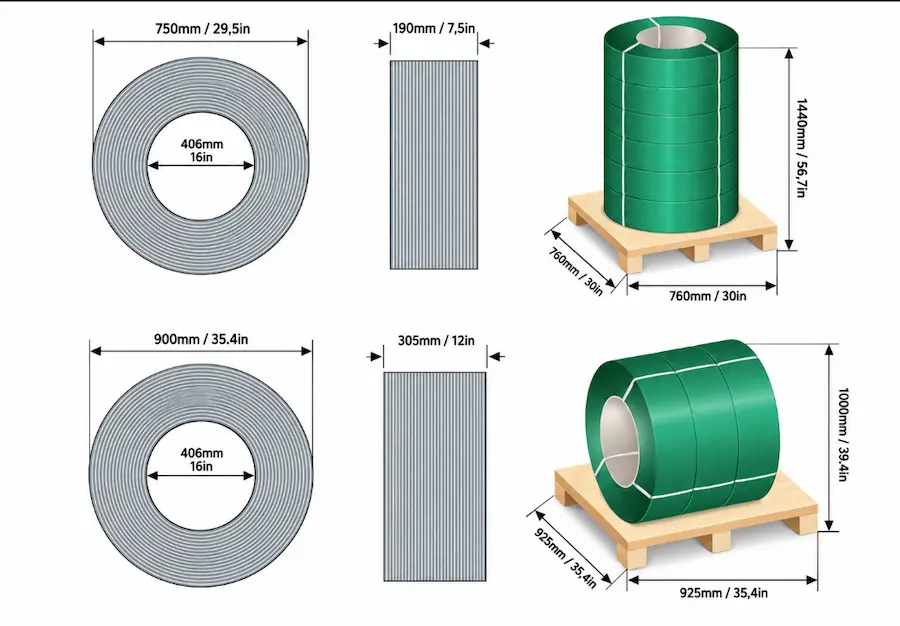
| Coil format | Core inside diameter, coil width, maximum outside diameter and any weight restriction | Connects the order to the customer's dispenser requirements |
| Quantity per coil | Declared length and how it will be verified; net strap weight if relevant to the quote | Clarifies what each quoted coil contains |
| Product identification | Your SKU, supplier's item reference and specification revision | Keeps samples, purchase orders and deliveries tied to the same item |
Keep the original dimensions from the customer's approved specification. If both inch and metric values are used, identify the controlling dimensions and their tolerances so that a rounded conversion does not become a new purchase requirement.
Keep Surface Finish and Coil Format in the SKU Definition

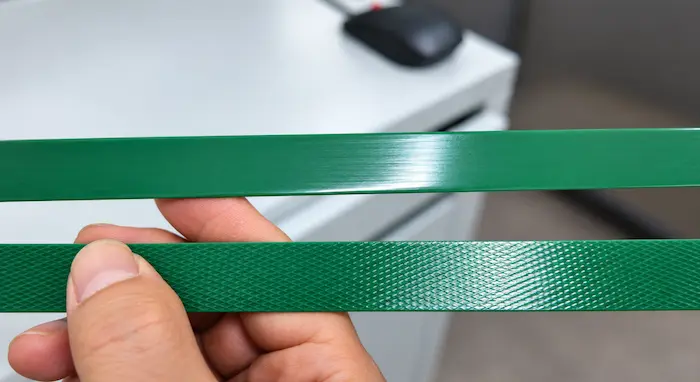
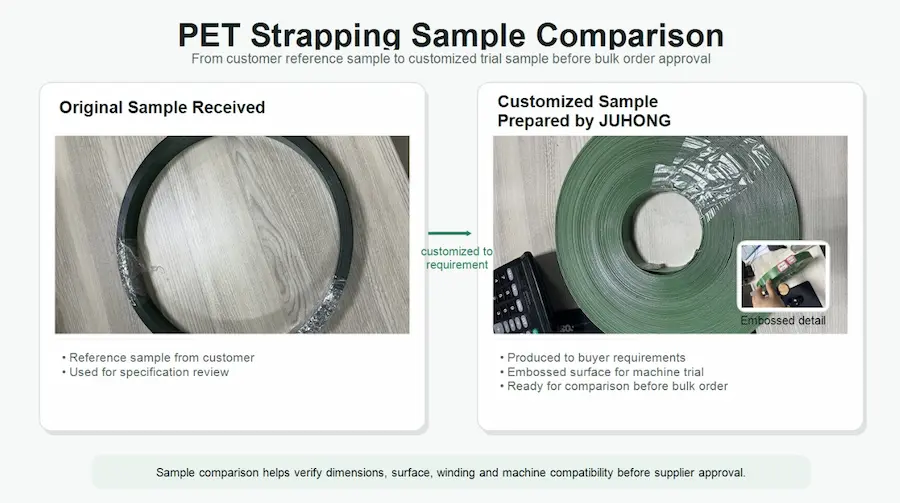
Specify whether the approved polyester strapping is smooth or embossed. A matching width alone does not establish that a different finish is suitable for the application. Retain the finish required by the customer's equipment and approved application; evaluate a proposed change before accepting it as an equivalent. The smooth versus embossed PET strapping guide covers that comparison in more detail.


Coil format deserves equal attention. A matching core does not settle whether the full roll fits the dispenser. Coil width, outside diameter, weight, and winding condition are separate considerations. Ordering a longer roll to reduce changeovers only helps if the receiving installation can use it.
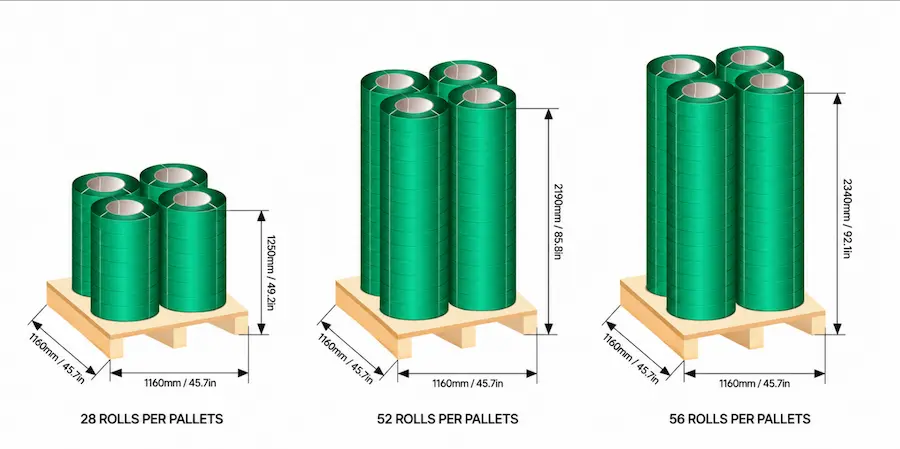
| Weight/Rolls | 10kgs | 20kgs | 70kgs | 330kgs | Cut Cotton Strap |
| Core Dimensions | 406*76mm | 406*150mm | 406*190mm | 406*305mm | / |
| Rolls/Pallet | 48/52 rolls | 28/32/52/56/60 rolls | 6 rolls | 3 rolls | Customized |
Compare Bulk Polyester Strap Quotes on the Same Quantity and Delivery Basis
A low price for a PET strapping roll is useful only when the offers meet the same approved requirements and contain comparable quantities. Price per kilogram answers a different question from price per unit of length, while gross shipping weight includes more than the strap itself.
For offers that already meet the same specification, a simple first comparison is
Quoted strap cost per 1,000 ft = price per coil ÷ declared feet per coil × 1,000.
For metric quotations, use the same calculation per 1,000 m. This compares the quoted material quantity; it does not account for rejected material, operating performance, or charges outside the quoted price. A longer roll with an unsuitable coil format should not enter the comparison as an equivalent offer.
Separate Order Volume From the Quantity of Each Specification
An inquiry for a total tonnage leaves the supplier guessing if that volume spans several widths, thicknesses, or coil formats. List the initial quantity for each SKU and distinguish it from estimated repeat demand. Ask for the minimum order quantity applicable to each specification and whether different items can be combined in one order.
This distinction is especially useful for distributors. The overall order may be substantial while demand for one specification is still uncertain. Comparing the minimum commitment per SKU helps reveal how much inventory each offer requires, rather than letting the total order size hide a slow-moving item.
Include Packing and Delivery in the Comparison
Request the coil count, packing arrangement, gross shipment weight, and dimensions needed to assess the proposed delivery. State the destination and delivery basis so that freight included in one offer is not mistaken for a higher material price than an offer that excludes it.
For replenishment planning, distinguish production lead time from transit time and establish what starts the quoted lead time. Sample approval, final specification agreement, and order confirmation are different milestones. The dates relevant to a repeat order may also differ from those for the first qualified order.
Qualify the Sample for the Application You Will Supply
A sample is most useful when it represents a clearly identified proposed production specification. Keep its item reference, dimensions, finish, and coil format with the trial result. Otherwise, “sample approved” can become an ambiguous instruction when the bulk order is placed.
Distributors should coordinate the trial with the customer who will use the material. For an industrial buyer, the relevant plant team should be involved. The purchasing decision needs three different kinds of evidence:
| Evidence | What it helps establish | What it does not establish by itself |
| Strap test results | The tested material's properties under the stated method and conditions | Performance on every machine or suitability for a particular loaded pallet |
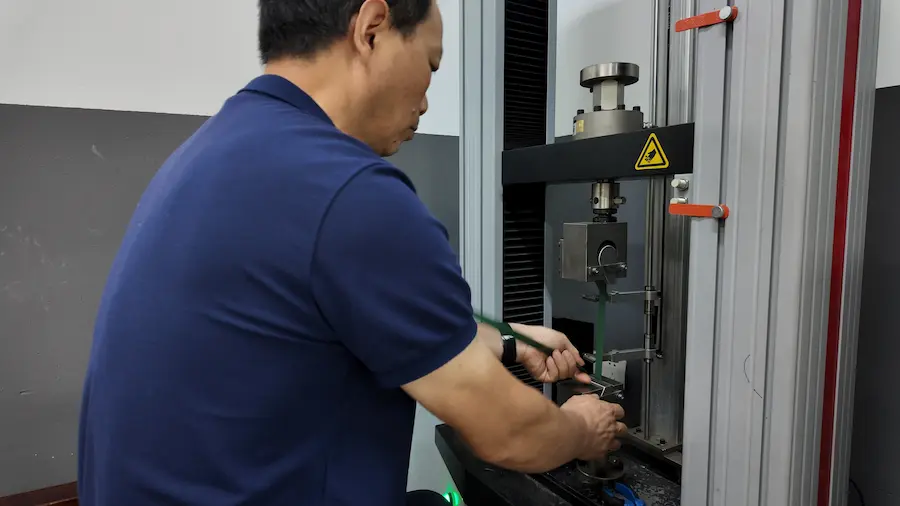
| Trial on the intended equipment | Feeding, tensioning, joining and dispensing behavior under the recorded trial conditions | Acceptance of all future production or untested installations |
| Assessment of the finished package | Suitability of the strap, joints and packaging arrangement for the intended application | Universal suitability for other loads or distribution conditions |
Record the strapping equipment and head details, operating speed, tension settings, and any adjustments needed during the trial. A pass achieved after changing settings should retain that context when the purchasing team approves the item.
For a distributor supplying several customers, approval can be recorded by application rather than treated as permission to sell the roll as a universal replacement. This also helps explain to a new customer what has been evaluated and what still needs testing.
Request Test Documents That Answer the Purchase Requirement

A report should identify the tested item, relevant sample or batch reference, test method, and results needed for the agreed specification. A general product datasheet and a report for a specific sample serve different purposes; neither should be described as the other.
Where a customer specifies a standard, name the edition and applicable requirements in the inquiry. ASTM International's public listing for ASTM D3950-23 covers nonmetallic strapping and joining methods [1]. A reference to that standard alone does not establish that the offered product meets the customer's requirements. Obtain the evidence required by the order, with its product and test scope clearly identified.
Carry Sample Approval Into the Bulk Order

The bulk purchase order should refer to the agreed specification revision and approved sample identification, with written acceptance criteria. “Same as sample” is difficult to resolve if the sample is unlabelled, different parties retained different rolls, or the expected properties were never recorded.
Before placing the order, agree on how product identification, quantity, dimensions, winding condition, and required performance evidence will be assessed. Keep packaging checks separate from material checks: intact wrapping does not establish that the strap meets its mechanical requirements.
For distributors, receiving records are also useful when material is split across several customers. Where lot identification is provided, retain its connection to the incoming shipment and outgoing orders. If a customer reports a problem, the original coil label, relevant order, equipment details, and description of the issue provide a more useful starting point than the strap color or width alone.
Agree how discrepancies will be documented and handled before they become a delivery dispute. These are purchasing controls to establish with the supplier, rather than capabilities to assume from a product listing.
Make Repeat Orders Refer to the Approved Specification
Reordering by width and color alone can lose the requirements established during qualification. Use the same item reference and specification revision, and identify which proposed changes need review before production or dispatch.
For machine grade PET, that discussion should cover the purchased dimensions and tolerances, mechanical requirements, surface finish, and coil format. A change in roll length may affect the quoted quantity and dispenser fit; a change in finish may require application review even when the nominal dimensions remain unchanged.
If a change is proposed, decide whether document review is sufficient or another customer trial is needed. The answer depends on what changed and which requirement it affects. Keeping that decision attached to the item record makes the next order easier to evaluate.
Frequently Asked Questions About Buying Machine Grade PET Strapping
Can a distributor use one specification for several customers?
Yes, where it meets each customer's equipment and application requirements. Treat shared dimensions as a starting point, then establish suitability for the installations concerned. One customer's approval is evidence for that application, not proof that all customers can use the same roll.
Should I request pricing per roll, per kilogram, or per unit of length?
Request the supplier's quotation basis together with the information needed to compare equivalent quantities. For identical approved specifications, length-based comparison helps clarify differences between coils. Keep net strap weight separate from core and packing weight, and compare delivery charges on the same basis.
Does a stronger strap make a better substitute?
Not automatically. A higher breaking-force value does not resolve dimensional fit, coil compatibility, feeding, or joining requirements. Select against the customer's complete specification rather than using the largest strength number as a substitute for application approval.
What should be agreed before ordering mixed specifications?
Agree the quantity and minimum order requirement for each SKU, the packing and identification of each item, and the proposed dispatch arrangement. Separate firm order quantities from forecasts. Mixed-order availability and commercial terms need confirmation for the specific inquiry.
Does passing a sample trial remove the need for bulk acceptance checks?
No. The trial establishes what was observed with the identified sample under recorded conditions. The bulk order still needs agreed acceptance criteria and evidence connecting the delivered material to the purchased specification.
What information makes a bulk inquiry easier to quote?
Provide the required specification or current product label, the customer's machine and strapping-head details, coil requirements, quantity by SKU, destination, and target delivery date. Add any required test documentation or customer approval conditions. If a requirement is unknown, flag it instead of guessing.
Discuss Your Bulk Machine Grade PET Requirements With JUHONG
For a new sourcing project or repeat-supply inquiry, visit JUHONG's machine grade PET strapping and share your specification, quantity by item, and intended application.
Wholesalers and distributors can also include the customer equipment requirements and expected repeat demand, while industrial purchasing teams can identify the plants or lines covered by the inquiry. This gives the discussion a concrete basis for proposed specifications, sample evaluation, and order terms.
Reference
[1] ASTM International. ASTM D3950-23: Standard Specification for Strapping, Nonmetallic (and Joining Methods).
![]() juhong-pet-strapping-brochure.pdf
juhong-pet-strapping-brochure.pdf
 简体中文
简体中文