 简体中文
简体中文


Views: 0 Author: Sunny Yu Publish Time: 2026-05-29 Origin: Site


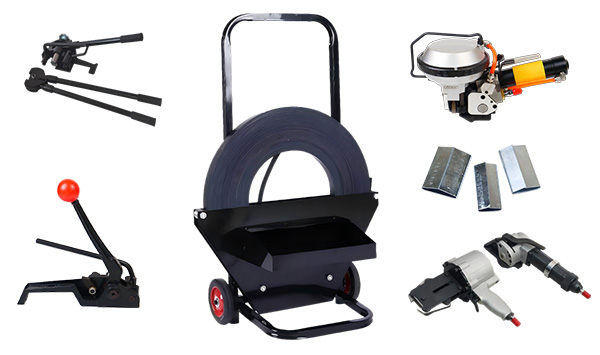
Steel strapping tools are used to tighten, seal, cut and dispense steel strap during industrial packaging. The main tools include steel strapping tensioners, steel strapping sealers, steel strapping cutters, dispensers and carts. For reliable packaging, the tool should match the steel strap width, thickness, tensile grade, steel strapping seal and coil type.
In many packaging operations, problems do not come from the steel strap alone. Loose bundles, weak joints, broken straps or slow packing speed often happen because the strap, seal and tool are not matched correctly. This guide explains what each steel strapping tool does and how buyers can choose a practical tool combination for industrial packaging.
Steel strapping tools are usually selected as a complete packaging set, not as separate items. A normal steel strapping operation may need a tensioning tool, a sealing tool, a cutter and a dispenser. For different packaging volumes and load types, buyers may choose manual tools, pneumatic tools, split-type tools or sealless steel strapping tools.
| Tool Type | Main Function | Used With | Common Use |
|---|---|---|---|
| Steel Strapping Tensioner | Tightens steel strap around the load | Steel strap and steel strapping seals | Manual packaging, warehouse bundling and standard steel strapping operations |
| Steel Strapping Sealers | Crimp the seal to lock the steel strap joint | Steel strapping seals | Sealed steel strapping joints for regular duty or high tensile steel strap |
| Pneumatic Steel Strapping Tool | Uses compressed air to tension and seal steel strap more efficiently | Steel strap, matching seals and air supply | Repeated packaging, heavy-duty loads and factory packaging lines |
| Split-Type Steel Strapping Tools | Use a separate tensioner and sealer for the same packaging operation | Steel strap and matching steel strapping seals | Heavy-duty packaging where higher tension and stronger sealed joints are required |
| Sealless Steel Strapping Tool | Tensions, cuts and forms a mechanical joint without a separate seal | Steel strap only | Applications that want to reduce seal use and simplify the packing process |
| Steel Strapping Cutter | Cuts steel strap safely after packaging or during unpacking | Steel strap roll or strapped packages | Cutting finished straps, opening packages and reducing spring-back risk |
| Steel Strapping Dispenser / Cart | Holds and feeds steel strapping coil during operation | Ribbon wound, oscillated wound or jumbo wound steel strapping coil | Warehouses, production lines and high-frequency packaging areas |
Juhong mainly manufactures steel strapping and steel strapping seals. For customers who need a complete packaging solution, we can also help match suitable manual, pneumatic, split-type or sealless tools according to the actual application.
Steel strapping tools are used to apply steel strap around industrial loads. A complete operation usually includes wrapping the strap around the product, tensioning the strap, sealing the joint and cutting the remaining strap.
Steel strapping is often used for heavy, rigid or sharp-edged products where plastic strapping may not provide enough holding power. Common applications include metal products, aluminum ingots, steel coils, pipes, timber, construction materials, machinery parts, pallets and export packaging.
A complete steel strapping system may include:
Steel strapping
Steel strapping seals
Steel strapping tensioner
Steel strapping sealers
Steel strapping cutter
Steel strapping dispenser or cart
Edge protection for sharp corners
Manual or pneumatic tools, depending on packaging volume
For buyers, the key point is not simply choosing a stronger tool. The correct tool must fit the actual strap width, strap thickness, tensile grade, seal type, coil type and packaging frequency.
Steel strapping tools should not be selected separately from the steel strap and seal. A tool that works well with one strap size may not work properly with another. A sealer that fits one type of steel strapping seal may not create enough joint strength with a different seal.
Before choosing steel strapping tools, buyers should confirm:
Steel strap width
Steel strap thickness
Regular duty or high tensile steel strapping
Steel strapping seal type
Seal width and seal style
Steel strapping coil type
Packaging frequency
Manual or pneumatic operation
Load weight and product shape
For example, if a customer uses high tensile steel strapping for heavy metal bundles, a light manual tool may not provide enough tensioning performance. If the seal size does not match the steel strapping sealer, the joint may look closed but fail during lifting or transportation.
That is why Juhong recommends checking the whole packaging system together: steel strap, seal, tool and application.
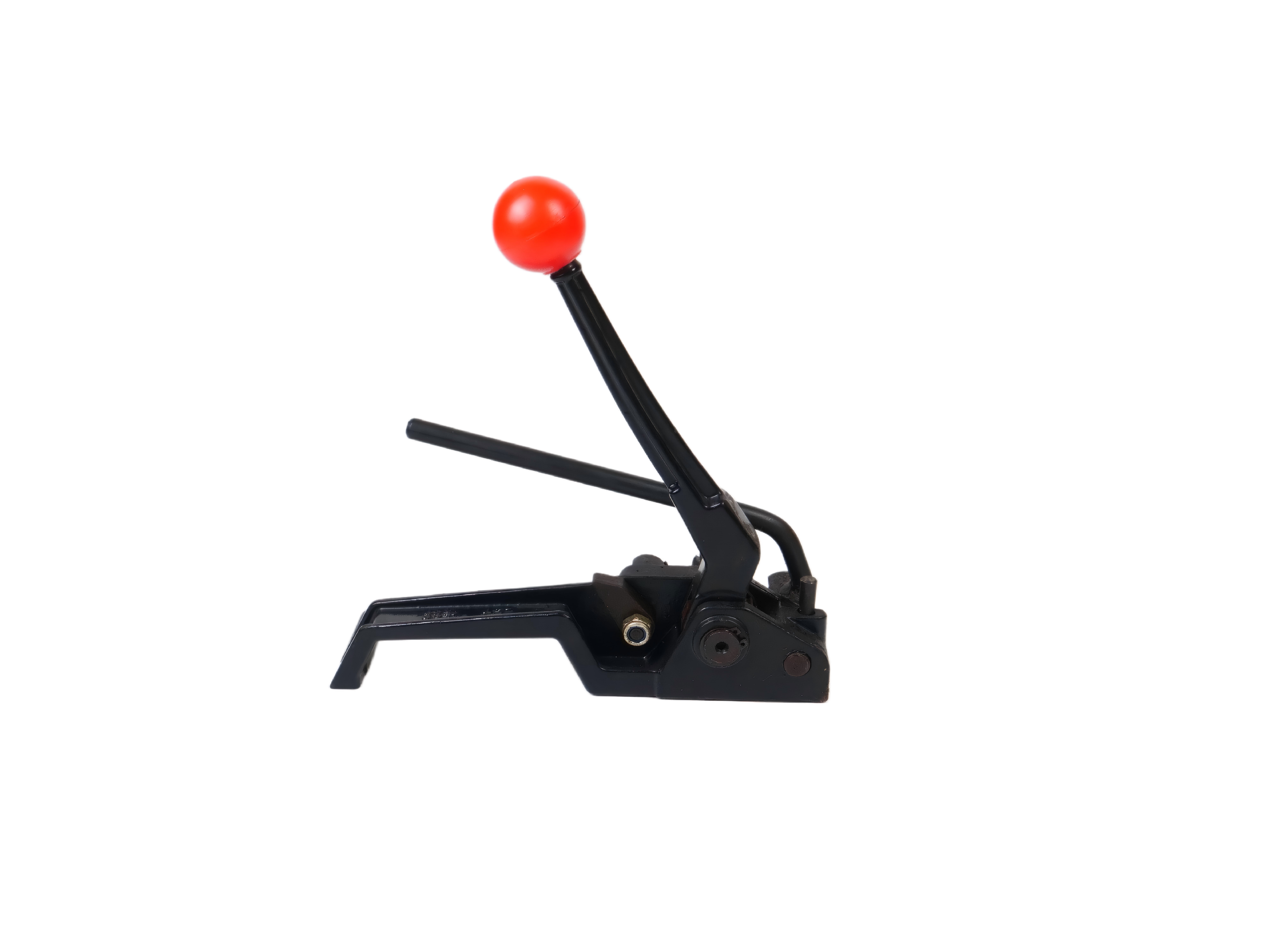
A steel strapping tensioner is used to pull the steel strap tight around the load before the joint is sealed. Without proper tension, the bundle may loosen during lifting, storage or transport.
A manual steel strapping tensioner is commonly used for flexible packaging work, smaller batches and warehouse operations. It does not require air supply or electricity, so it is convenient for general industrial use.
Manual tensioners are suitable when:
Packaging volume is low to medium
The operation needs flexibility
The packaging location changes often
The buyer wants lower initial tool cost
The strap size is within the tool’s working range
Manual tensioning depends heavily on the operator. If different workers apply different force, tension consistency may vary.
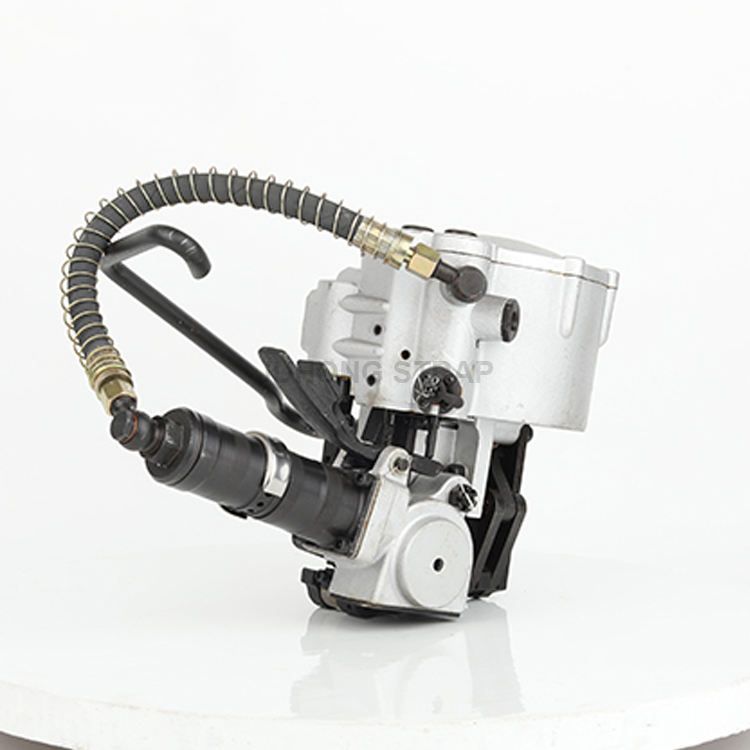
Pneumatic steel strapping tools use compressed air to improve speed and tension consistency. They are more suitable for repeated packaging work, heavy-duty loads or fixed production areas.
Pneumatic tools are usually considered when:
Packaging volume is high
The load is heavy
The same strap size is used repeatedly
Operators need higher efficiency
More consistent tension is required
Manual packaging becomes too labor-intensive
For steel coils, aluminum ingots, metal bundles or heavy export cargo, pneumatic tools can help improve packing speed and reduce operator fatigue.
When choosing a steel strapping tensioner, buyers should check:
Strap width
Strap thickness
Steel strapping grade
Required tension
Packaging frequency
Product weight
Operator experience
Manual or pneumatic operation
If the tool cannot handle the selected steel strap thickness or tensile grade, the package may not reach the required holding performance.
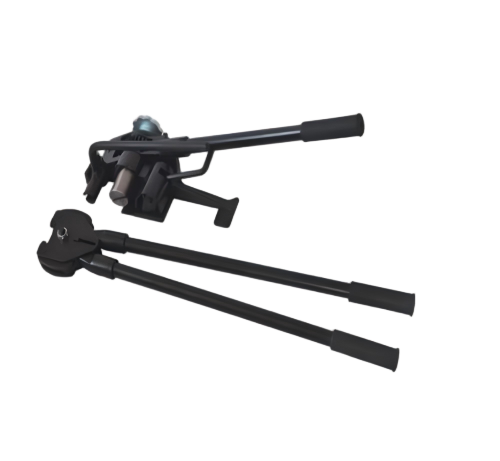
Steel strapping sealers are used to crimp the seal and lock the steel strap joint. This step is critical because even a strong steel strap can fail if the joint is weak.
A steel strapping sealer must match the steel strapping seal. Buyers should check the seal width, seal type and strap thickness before placing an order.
Common seal-related problems include:
Seal not fully crimped
Wrong seal size
Weak joint strength
Seal slipping during transport
Mismatched strap thickness
Using the wrong sealer jaw for the seal
For many packaging lines, the joint is the weakest point of the whole package. That is why seal selection and sealer compatibility should be checked together.
Juhong produces steel strapping seals for different steel strapping applications. If you are unsure which seal is suitable, send us your strap width, strap thickness and packaging method. We can help check whether the seal and sealer combination is suitable.
Some sealers make a single notch, while others create a double notch. The right choice depends on strap size, seal type and required joint strength.
For standard packaging, a suitable manual sealer may be enough. For heavy-duty or high tensile steel strapping, buyers should pay more attention to seal strength, tool compatibility and the operator’s sealing method.

A pneumatic steel strapping tool uses compressed air to tension, seal or assist steel strapping operations. It is commonly used when the packaging frequency is high or when the load requires stronger and more consistent tension.
Compared with manual tools, pneumatic tools can reduce labor intensity and improve packaging speed. They are often used in heavy-duty industrial packaging, especially where operators need to pack many bundles every day.
Pneumatic tools are suitable for:
Steel coils
Aluminum ingots
Pipes and tubes
Timber bundles
Metal products
Heavy pallets
Export packaging
Repeated factory packaging operations
When choosing a pneumatic steel strapping tool, buyers should confirm air pressure, strap width, strap thickness, tensile grade, tool weight, operation speed and maintenance requirements.
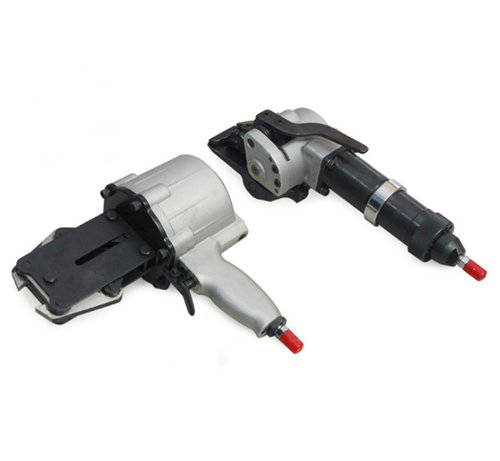
Split-type steel strapping tools usually refer to a separate tensioner and sealer system. In many heavy-duty steel strapping applications, split-type tools are pneumatic and used together with steel strapping seals.
The main advantage of split-type tools is flexibility. The tensioner and sealer work separately, so the operator can choose a tool set according to strap size, seal type and application.
Split-type steel strapping tools are often used when:
Higher tension is required
The package is large or heavy
Steel strapping seals are used
The operator needs a separate tensioning and sealing process
The application is not suitable for a one-piece combination tool
Split-type does not only mean pneumatic. It mainly describes the structure: the tensioning tool and the sealing tool are separate. In heavy-duty steel packaging, pneumatic split-type tools are common, but buyers should still check the actual tool specification.

A sealless steel strapping tool forms a mechanical joint without a separate steel strapping seal. It tensions, cuts and locks the steel strap by creating a joint directly on the strap.
Sealless tools can reduce the need for separate seals and simplify the packaging process. They may also help reduce seal inventory and improve packing speed in suitable applications.
However, a sealless steel strapping tool is not suitable for every operation. Buyers should confirm:
Steel strap width
Steel strap thickness
Steel strapping grade
Tool model
Joint strength requirement
Product type
Packaging frequency
Operator skill
For customers already using steel strapping seals, a traditional tensioner and sealer setup may still be more practical. For customers who want to reduce seal use, a sealless steel strapping tool can be evaluated according to application.

A steel strapping cutter is used to cut steel strap safely. This tool is often overlooked, but it is important for operator safety.
Steel strap can spring back when cut, especially if it is under tension. Using an unsuitable cutter or cutting in the wrong position may create safety risks.
For safer cutting, operators should follow these steps:
Wear gloves and eye protection.
Stand to the side of the strap, not directly in the rebound direction.
Hold the strap to control movement before cutting.
Use a proper steel strapping cutter.
Cut away from the body.
Dispose of sharp strap ends immediately.
A good cutter should match the steel strap thickness and be sharp enough to cut cleanly. If the cutter blade is worn, the operator may need more force, which increases risk.
Replace or repair the cutter when:
Cutting becomes difficult
The blade edge is damaged
The strap end becomes badly deformed
Operators need excessive force
The tool no longer cuts cleanly
In factories with frequent steel strapping use, cutters should be checked regularly as part of packaging safety management.

A steel strapping dispenser or cart holds and feeds the steel strapping coil during packaging. It helps keep the coil organized, reduces strap tangling and improves working efficiency.
Without a dispenser, steel strapping coils may become difficult to handle. The strap can twist, drag on the floor or become damaged before use. This slows down packaging and may affect strap feeding.
A dispenser or cart is useful when:
The packaging area changes often
Operators need to move the steel strap around the warehouse
The coil is heavy
Packaging frequency is high
The customer uses ribbon wound, oscillated wound or jumbo wound steel strapping
Different steel strapping coil types may require different dispenser designs.
Ribbon wound steel strapping is often used in manual or pneumatic packaging operations. It is common in flexible packaging areas.
Oscillated wound steel strapping offers longer running length and reduces coil change frequency. It is suitable for higher-volume operations.
Jumbo wound steel strapping is used when customers need longer continuous operation and fewer coil changes. For these applications, dispenser stability and coil handling method should be checked carefully.
Manual and pneumatic steel strapping tools are both useful, but they are suitable for different packaging conditions.
| Factor | Manual Steel Strapping Tools | Pneumatic Steel Strapping Tools |
|---|---|---|
| Initial cost | Lower | Higher |
| Speed | Slower | Faster |
| Labor intensity | Higher | Lower |
| Tension consistency | Depends on operator | More consistent |
| Best for | Low to medium-volume packaging | High-volume industrial packaging |
| Typical use | Warehouse and flexible jobs | Heavy-duty or repeated packaging |
| Maintenance | Simple | Requires air supply and maintenance |
Manual tools are suitable when the packaging volume is not very high, the operation is flexible and the buyer wants a lower initial investment. They are commonly used in warehouses, repair areas, small batches and general industrial packaging.
Pneumatic tools are more suitable for repeated packaging, heavy loads and production line use. They help improve speed and tension consistency, especially when workers need to pack many bundles every day.
If the packaging line uses high tensile steel strapping or thick steel strap, pneumatic tools may reduce operator fatigue and improve overall efficiency.
Split-type and sealless tools are often confused, but they work differently.
| Tool Type | Requires Steel Strapping Seal? | Main Structure | Suitable Use |
|---|---|---|---|
| Split-Type Steel Strapping Tools | Yes | Separate tensioner and sealer | Heavy-duty packaging with steel strapping seals |
| Sealless Steel Strapping Tool | No | One tool forms the joint directly on the steel strap | Applications that want to reduce seal use |
| Manual Steel Strapping Tools | Usually yes | Manual tensioner and sealer | Low to medium-volume packaging |
| Pneumatic Steel Strapping Tools | Usually yes, depending on tool type | Air-powered tensioning and sealing | High-volume or heavy-duty packaging |
Choose split-type tools when you already use steel strapping seals and need stronger or more flexible operation. Choose sealless tools when the application allows a seal-free joint and you want to reduce the need for separate seals.
Choosing steel strapping tools is mainly a matching process. Buyers should not select tools only by price or appearance. The tool must match the strap, seal and actual packaging operation.
The tool must match the width and thickness of the steel strap. If the strap is too thick or too wide for the tool, tensioning or sealing may fail.
Regular duty steel strapping and high tensile steel strapping may require different tool performance. High tensile steel strap usually needs stronger tool capability and more careful seal selection.
If the operation uses steel strapping seals, the sealer must match the seal type and size. If the operation uses a sealless steel strapping tool, confirm whether the steel strap is suitable for the tool and joint type.
Manual tools are practical for low to medium-volume use. Pneumatic tools are better for high-volume packaging, heavy-duty cargo or repeated operation.
Check whether the steel strapping coil is ribbon wound, oscillated wound or jumbo wound. The dispenser or cart should support the coil size and operating method.
Operators should know how to tension, seal and cut steel strapping safely. Training is especially important when working with high tensile steel strapping or heavy packages.
Before ordering in bulk, send your supplier the strap size, seal type, tool model, application and load information. This helps avoid mismatched tools and unnecessary cost.
Low-cost tools may work for simple tasks, but they may not last long in heavy-duty packaging. If the tool cannot provide stable tension or sealing, the final packaging result may become unreliable.
Some buyers only check strap width and forget thickness. This can cause tool mismatch. The same width can have different thicknesses, and thicker steel strap requires stronger tool capability.
A sealer must match the seal style and size. Using the wrong sealer may create a weak joint, even when the seal looks closed.
Manual tools are useful, but they may not be efficient for high-volume heavy-duty packaging. In this case, pneumatic tools or combination tools may reduce labor pressure.
A dispenser is not always considered a core tool, but it affects efficiency. For heavy coils or frequent packaging, a proper dispenser or cart can reduce coil handling problems.
Different steel strapping applications need different tool combinations.
For regular duty steel strapping, a common tool set may include:
Manual steel strapping tensioner
Steel strapping sealers
Steel strapping cutter
Steel strapping dispenser or cart
Matching steel strapping seals
This combination is suitable for general packaging, stable pallets and standard industrial bundles.
For high tensile steel strapping, buyers should check tool strength more carefully. A common setup may include:
Heavy-duty steel strapping tensioner
Suitable high-strength steel strapping seals
Matching steel strapping sealers
Steel strapping cutter
Dispenser or cart
Pneumatic tool if packaging volume is high
This setup is more suitable for steel coils, aluminum ingots, metal bundles, timber and export packaging.
For repeated packaging operations, buyers may need:
Steel strapping coil
Steel strapping dispenser or cart
Pneumatic steel strapping tool
Matched steel strapping seals
Operator training
Technical support for tool and seal matching
In this situation, the key is not only tool price. The whole packaging process should be checked for speed, safety and joint reliability.
Juhong Packing Materials is a professional steel strapping manufacturer focusing on steel strapping and steel strapping seals. These are the core products we control directly in production.
For buyers who also need tools, we can help check suitable manual, pneumatic, split-type or sealless steel strapping tools based on the strap size, seal type and packaging application. This is especially useful when customers want a complete packaging solution instead of buying each item separately.
To help us recommend a suitable solution, please provide:
Product type
Load weight
Strap width and thickness
Regular duty or high tensile requirement
Seal type
Coil type
Packaging frequency
Manual or pneumatic operation preference
Photos or videos of the packaging process
With this information, we can help match steel strapping, steel strapping seals and compatible tools more accurately.
Most steel strapping applications require a tensioner, sealer, cutter, and dispenser or cart. Some high-volume or heavy-duty packaging operations may use pneumatic steel strapping tools or sealless steel strapping tools.
The right tool setup depends on strap width, strap thickness, tensile grade, seal type, joint method, packing volume, and working environment.
Buyers should choose steel strapping tools by confirming the steel strap width, thickness, tensile grade, coil type, seal type, packaging volume, and operation method. A tool that works for one strap size may not work well with another size or grade.
If the application involves heavy loads, repeated packing, or export packaging, buyers should confirm tool compatibility before bulk ordering.
Manual steel strapping tools are usually suitable for low to medium-volume packaging, flexible warehouse use, and operations where packing speed is not the main concern. Pneumatic steel strapping tools are often selected for high-volume, repeated, or heavy-duty packaging where more consistent tensioning and faster operation are needed.
The best choice depends on daily packing volume, strap size, worker operation, air supply, and required joint strength.
A steel strapping tensioner tightens the steel strap around the load. A steel strapping sealer closes the seal and locks the joint after the strap has been tensioned.
Both tools must match the strap width, strap thickness, tensile grade, and seal type. If the tensioner or sealer does not match the strap, the package may have weak tension, poor sealing, or unstable load security.
A sealless steel strapping tool forms a mechanical joint directly on the steel strap without using a separate steel strapping seal. It can reduce the need for separate seals in suitable applications.
However, sealless tools must still match the steel strap width, thickness, tensile grade, and application requirement. Buyers should confirm compatibility before choosing a sealless system.
No. Steel strapping tools have specific working ranges. Buyers should check strap width, strap thickness, tensile grade, seal type, and tool model before ordering.
Using the wrong tool may cause poor tensioning, weak joints, tool damage, or strap breakage during operation.
A steel strapping tool may fail to tension or seal properly because of strap-tool mismatch, worn tool parts, incorrect operation, unsuitable seal type, damaged strap edges, or insufficient air pressure for pneumatic tools.
If the problem happens repeatedly, buyers should check the steel strap size, seal type, tool condition, joint method, and packaging application together instead of replacing only one item.
If you are choosing steel strapping tools for industrial packaging, start with the steel strap and seal first. Send us your strap size, seal type, product application and packaging method. Juhong can help recommend suitable steel strapping, matching seals and compatible tools for your packaging operation.
Request a steel strapping quote and tell us your required strap size, seal type and packaging application.
 juhong steel strapping Brochure.pdf
juhong packing materials Strapping Seals Brochure.pdf


