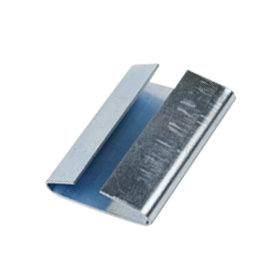
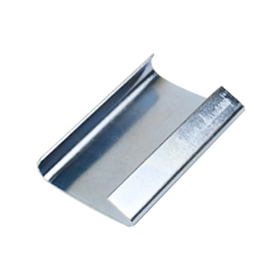
Choosing a steel strapping seal manufacturer in China is not only about finding a low unit price. For industrial packaging buyers, the real question is whether the supplier can match the right seal type, strap width, tool system, surface finish, packing method, and quality control requirements for your application.
If the seal is not compatible with the strap or tool, the package may look acceptable during packing but lose joint strength during handling, storage, or long-distance transport. That is why buyers should compare suppliers by technical matching ability, not only by quotation.
Direct Answer
A reliable steel strapping seal manufacturer in China should be able to provide compatible strapping seals for different strap widths; explain the difference between snap-on seals, push-type seals, thread-on seals, open-flange seals, serrated seals, and magazine seals; support tool compatibility checks; and provide consistent batch quality for industrial packaging applications.
For buyers, the best supplier is not always the one with the broadest catalog. It is the one that can help you match the seal with your steel strapping, PET strapping, PP strapping, tensioning tools, load type, and packaging environment.
Key Takeaways for Buyers
| What to Compare | Why It Matters |
| Seal type range | Different seal designs fit different tools, strap materials, and packaging methods. |
| Strap width compatibility | A wrong seal width can reduce grip and joint stability. |
| Tool compatibility | Manual, pneumatic, and machine systems may require different seal styles. |
| Surface finish | Galvanized or coated finishes may be needed for humid storage, export packaging, or corrosion-sensitive loads. |
| Quality inspection | Thickness consistency, dimensional accuracy, and joint testing help reduce packaging failure risk. |
| Export support | Overseas buyers need stable packing, labeling, documentation, and repeatable specifications. |
| Technical communication | A good supplier should ask about strap size, tool type, and load application before quoting. |
| Long-term supply ability | Distributors and factories need consistent batches, not one-time samples only. |
1. Check Whether the Manufacturer Understands Seal Type Differences
When buyers discuss this product, they may use different names such as steel seals, strapping clips, banding clips, or metal strap clips. Instead of choosing by name only, it is safer to confirm how the seal is applied: whether it is placed on the strap before or after tensioning, whether the joint is crimped or notched, and whether the tool is manual, pneumatic, or machine-fed.
A qualified supplier should be able to explain the main seal types clearly.
![Magazine seal]()
![Push Type Seal(2)]()
![serrated seals(1)(1)(2)]()
![snap on seal(1)]()
![Thread-on Seal]()
![Open-flange seal]()
| Seal Type | Common Use | Buyer Notes |
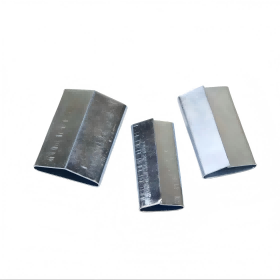
| Snap-on seal | Manual steel strapping applications | Usually placed over overlapped strap ends during or after tensioning, then closed with a matching sealer. Confirm whether the tool makes a notch joint or another approved joint style. |
| Push type seal | Round, irregular, or heavy steel strapping bundles | The strap ends are normally passed through the seal before tensioning. This style should be matched with a push-type tensioner or compatible tool system. |
| Thread-on seal | Larger steel strapping sizes, bales, bundles, or heavy-duty loads | The seal is threaded over the overlapped strap ends before the tensioning tool is applied. It is mainly selected when the packing process requires this pre-threaded method. |
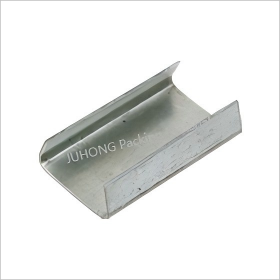
| Open flange seal | Heavier-gauge steel strapping and specific sealer designs | Similar in concept to a snap-on seal, but used for heavier applications or tool systems that require the open-flange structure. Confirm the sealer jaw and joint method before ordering. |
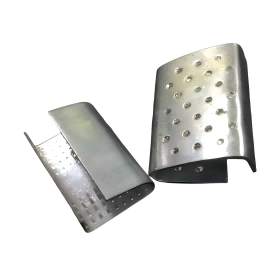
| Serrated seal | PET or PP strapping applications that need additional bite | The serrated surface grips the plastic strap to help reduce slippage. It should be selected according to plastic strap width, thickness, and manual tool type. |
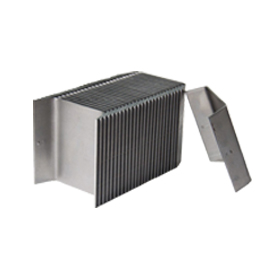
| Magazine seal | Machine, pneumatic, or high-volume strapping stations | Supplied in a stacked or connected form for tools or machines with a seal magazine. Check feeding method, seal dimensions, and machine compatibility before ordering. |
If a manufacturer cannot explain the difference between these products, the buyer may receive a seal that looks similar but does not work well with the intended tool or strap.
2. Confirm Strap Width and Seal Size Compatibility
Strapping seals must match the width of the Steel /PET/PP strap. A seal that is too wide may not crimp properly. A seal that is too narrow may not hold the strap overlap securely.
Common seal width references include:
| Strap Width | Common Seal Reference | Typical Use |
| 1/2 inch / 13 mm | 13 mm steel strapping seal | Light to medium industrial packaging |
| 5/8 inch / 16 mm | 16 mm steel strapping seal | Cartons, pallets, bundled materials |
| 3/4 inch / 19 mm | 19 mm steel strapping seal | Heavy palletized goods, steel products, wood, building materials |
| 1 inch / 25 mm | 25 mm steel strapping seal | Heavy-duty industrial loads |
| 1-1/4 inch / 32 mm | 32 mm steel strapping seal | Large or high-load packaging systems |
Actual seal dimensions, carton quantity, surface finish, and packing method should be confirmed according to the latest product specification and order requirements.
3. Ask Whether the Supplier Can Match Seals With Tools
Tool compatibility is one of the most important questions when choosing a strapping seal supplier.
Buyers should tell the manufacturer:
Strap material: steel, PET, or PP
Strap width and thickness
Tool type: manual, pneumatic, battery-powered, machine, or automatic line
Joint method: sealed joint, sealless joint, serrated seal, magazine seal, or other system
Load type and transport condition
For example, a seal used with manual steel strapping tools may not be suitable for a machine-grade packaging line. A serrated seal for PET strapping may not be interchangeable with a standard steel strapping seal. A magazine seal should be checked against the machine feeding system.
A serious manufacturer should ask these questions before confirming the quotation.
4. Compare Quality Control, Not Only Price
For steel strapping seals, small dimensional differences can affect packing performance. Buyers should compare quality control logic before comparing price.
Important quality points include:
| Quality Point | What Buyers Should Ask |
| Thickness consistency | Is the seal thickness stable across batches? |
| Dimensional accuracy | Can the seal fit the required strap width and tool jaw? |
| Edge quality | Are edges controlled to reduce tool jamming or handling issues? |
| Surface finish | Is the finish suitable for storage, sea freight, or humid environments? |
| Joint performance | Is joint strength checked according to product requirements? |
| Batch consistency | Can the supplier keep repeat orders consistent? |
| Packing quality | Are cartons, labels, and export packing suitable for overseas shipment? |
JUHONG's product knowledge emphasizes seal matching, thickness checking, joint tensile testing, and tool compatibility as important quality topics for strapping seal content. Exact test values or certification coverage should be confirmed according to the latest product information.
For the Chinese market, buyers may also ask whether the supplier understands GB/T 39040-2020 for packaging steel strapping seals and edge protectors. JUHONG participated in drafting GB/T 39040-2020, which can support stronger technical communication around seal dimensions, application matching, and quality control logic. For export orders, however, buyers should still confirm specifications, testing requirements, surface finish, packing method, and documentation according to their own market and project requirements.
5. Check Surface Finish Options
Surface finish can affect corrosion resistance, appearance, and storage performance. A manufacturer should be able to explain which finish is suitable for your application.
Common options may include:
Cold-rolled finish for general industrial packaging
Galvanized finish for better corrosion resistance in export packaging, humid storage, or longer storage conditions
Painted or customized finish when project requirements are confirmed
Buyers should not choose surface finish only by appearance. The better question is, where will the packaged goods be stored? How long will they be in transit? And will the load face moisture or sea freight conditions?
6. Evaluate Whether the Supplier Supports Steel, PET, and PP Strapping Systems
Although this article focuses on steel strapping seal manufacturers, many buyers also use PET or PP strapping in the same warehouse or packaging line.
This matters because different strap materials require different joint methods:
")

")
| Strap Material | Seal Consideration |
| Steel strapping | Often uses steel seals, snap-on seals, push type seals, thread-on seals, open flange seals, or magazine seals depending on tool and application. |
| PET strapping | May use serrated metal seals in some manual applications, while heat weld or friction weld tools may not require metal seals. |
| PP strapping | May use serrated seals in selected manual applications, depending on strap width, strap thickness, and tool type. |
Do not assume one seal can work for every strap material. The correct choice should be confirmed with strap size, tool type, and application conditions.
7. Look for Supplier Experience With Industrial Applications
")

Strapping seals are used in many industrial packaging scenarios, including steel coils, steel pipes, wire rods, timber, building materials, glass, ceramics, paper, corrugated packaging, export pallets, and PET or PP strapping applications that need additional seal grip.
A good supplier should understand how packaging conditions affect seal selection.
For example:
Round or irregular loads may require different seal and tool handling than flat pallet loads.
Heavy steel products may need stronger joint stability than light cartons.
Humid storage or sea freight may require attention to surface finish.
Automatic packaging lines may require magazine seals with stable feeding performance.
This is why buyers should describe the load and packaging process before ordering.
8. Compare Communication and Quotation Quality
The best steel strapping seal manufacturer in China should not quote only by product name. A useful quotation should be based on actual packaging requirements.
Before requesting a quote, prepare:
Strap material
Strap width and thickness
Seal type, if already known
Tool model or tool type
Application industry
Load weight or load type, if available
Surface finish requirement
Carton quantity or packing preference
Destination market and shipping requirement
This information helps the supplier recommend the right seal type and avoid wrong-size orders.
Buyer Checklist: How to Compare Steel Strapping Seal Manufacturers
| Checklist Item | Yes / No |
| Does the supplier provide snap-on, push type, thread-on, open flange, serrated, or magazine seals as needed? |
|
| Can the supplier match seal width with your strap width? |
|
| Can the supplier check tool compatibility before quoting? |
|
| Can the supplier explain which seal is suitable for steel, PET, or PP strapping? |
|
| Can the supplier provide galvanized or other finish options when required? |
|
| Does the supplier check thickness and dimensional consistency? |
|
| Can the supplier support export cartons, labeling, and repeat orders? |
|
| Does the supplier ask about your packaging application before confirming the quotation? |
|
Where JUHONG Fits in the Supplier Selection Process
JUHONG Packing Materials is a China-based industrial packaging materials manufacturer founded in 1997. The company supplies steel strapping, PET strapping, stretch film, strapping seals, and related strapping tools for B2B packaging applications.
For steel strapping seals, JUHONG can help buyers match seal type, strap material, strap width, tool system, surface finish, and application requirements. Available product knowledge includes common seal categories such as snap-on seals, push-type seals, thread-on seals, open-flange seals, serrated seals, and magazine seals.
JUHONG participated in drafting GB/T 39040-2020 for packaging steel strapping seals and edge protectors. This standard is mainly used in the Chinese market. For overseas buyers, JUHONG can discuss export orders according to customer requirements, including seal size, tool compatibility, surface finish, packing method, and required documents.
For specific dimensions, carton quantities, coating requirements, and documentation support, buyers should confirm the latest product information before placing an order.
FAQ
Are strapping clips the same as strapping seals?
In many buyer searches, strapping clips, banding clips, metal strap clips, and strapping seals refer to similar fastening components used to secure overlapped strap ends. However, the exact product should be confirmed by strap material, strap width, seal type, and tool compatibility.
What is the best seal for steel strapping?
There is no single best seal for every steel strapping application. Snap-on seals, push-type seals, thread-on seals, open-flange seals, and magazine seals each fit different tools and packaging systems. Buyers should match the seal with strap width, strap thickness, tool type, and load condition.
Can PET strapping use metal seals?
PET strapping can use serrated metal seals in selected manual applications. However, PET strapping can also be joined by heat welding or friction welding tools, depending on the packaging system. Buyers should confirm the tool type before choosing seals.
What information should I send to a strapping seal supplier?
Send the strap material, strap width, strap thickness, seal type, tool type or tool model, application industry, surface finish requirement, and approximate order quantity. Photos of the current strap, tool, and seal can also help the supplier check compatibility.
Are galvanized steel strapping seals necessary?
A galvanized finish may be useful for export packaging, humid storage, sea freight, or corrosion-sensitive environments. If the packaging is used indoors for short-term storage, another finish may be enough. The final choice should be based on storage and transport conditions.
Why do steel strapping seals fail?
Common reasons include incorrect seal size, wrong seal type, tool mismatch, insufficient crimping, excessive tension, poor strap overlap, inconsistent seal thickness, or using the wrong seal for the strap material.
Should I buy seals and steel strapping from the same supplier?
It can reduce compatibility risk if one supplier can help match the strap, seal, and tool system. This is especially useful for distributors, factories, and industrial buyers that want repeatable packaging performance.
Does GB/T 39040-2020 apply to export orders?
GB/T 39040-2020 is a Chinese standard for packaging steel strapping seals and edge protectors. It can show that a supplier understands Chinese-market product requirements and quality control logic. For export orders, the final specifications, tests, surface finish, packing, and documents should be confirmed according to customer requirements.
CTA
If you are comparing steel strapping seal manufacturers in China, send JUHONG your strap width, strap thickness, seal type, tool model, surface finish requirement, and application scenario. JUHONG can help check the suitable strapping seal option for steel, PET, or PP strapping systems. Contact JUHONG for a suitable strapping seal recommendation.
![]() Juhong Packaging Materials Brochure.pdf
Juhong Packaging Materials Brochure.pdf
![]() juhong packing materials Strapping Seals Brochure.pdf
juhong packing materials Strapping Seals Brochure.pdf
 简体中文
简体中文